Yaacov’s Story
An Interview with a Holocaust Survivor
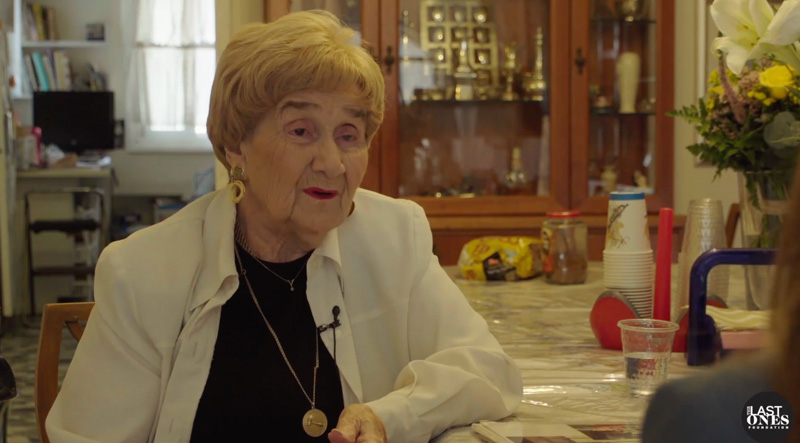
Narration: Today I am in Tel Aviv to meet Yaacov, who was born in Brussels, Belgium, in 1936. Raised in a deeply religious Jewish family alongside his older brother Herman, Yaacov survived the Holocaust as a hidden child. Today, surrounded by the memories of a lifetime, he shares his remarkable story.
Childhood in Belgium
Leslie: Tell me about your family before the war.
Yaacov: My father had a small diamond factory. My mother stayed at home. I had one brother, Herman, who was four years older than me. At home we spoke Yiddish.
The German Occupation
Narration: Germany invaded Belgium in 1940. At first, life continued almost normally, but by 1941 anti-Jewish measures intensified. Raids became common, Jewish families were forced to wear the yellow Star of David, and fear became a part of everyday life.
Yaacov: We had to wear the yellow star. We were always afraid. They were looking for the Jews.
His Father’s Deportation
Narration: In 1942, the Germans announced that Jewish men were being sent to Germany for work. Like thousands of others, Yaacov’s father believed the promise and reported as instructed.
Yaacov: My father went to work. He didn’t know he was going to Auschwitz. We didn’t know what Auschwitz was. Everyone thought they were going to work in a factory.
Separation from His Mother
Narration: After his father’s deportation, Yaacov, his brother, and their mother went into hiding. Their last moments together came when they were concealed inside a shoe store during a raid.
Yaacov: They hid us in a shoe store. I never saw my mother again.
Saved by the Belgian Resistance
Narration: Members of the Belgian Resistance rescued Yaacov and Herman and brought them to a Jewish orphanage filled with children who had also lost their parents. When German forces arrived to deport the children, the Resistance intervened once again, moving them to safety before they could be sent to Auschwitz.
Yaacov: The Resistance took us to an orphanage. There were hundreds of children there without parents. The Germans came, but the Resistance knew and moved us before they could take us away.
Hidden in a Convent
Narration: Yaacov and his brother were transferred to the Saint Joseph convent near Brussels, where they remained hidden for the rest of the occupation under the care of Catholic nuns.
Yaacov: We stayed together. My brother was always sad because he wanted to see our parents again. I learned to sing, to play the organ, and to sculpt. For me, life in the convent was wonderful.
After the War
Narration: When the war ended, Yaacov learned that neither of his parents had survived Auschwitz. Like so many hidden children, he had to rebuild his life while carrying the pain of unimaginable loss.
Leslie: You lost both your father and your mother.
Yaacov: Yes.
Remembering the Holocaust
Narration: Today, Yaacov lives in Israel surrounded by his family. By sharing his testimony, he honors the memory of his parents, the courage of the Belgian Resistance, and the people who risked their own lives to save Jewish children.
Leslie: Thank you for sharing your story with us.
Yaacov: Thank you.