The Courage to Say Her Name
An Interview with Judith
A Visit with Judith
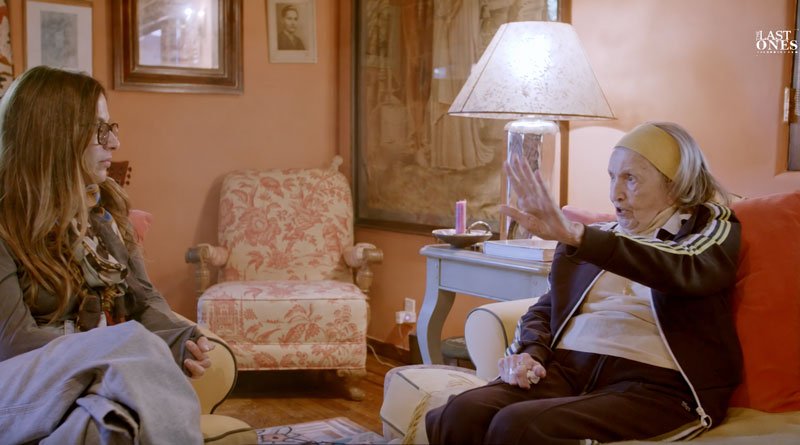
Leslie: Today I’m in New Jersey to visit Judith. She was born in 1930 in a small village in Czechoslovakia. Judith struggled for a long time to speak about her deportation. So she eventually shared her story through books.
Speaker unconfirmed: Hi. Hello. Finally meet you. Hello. I’m so I’m so glad to meet you. I’m so glad to meet you. I’m Leslie.
Leslie: Thank you. Well, thank you. It’s always good a little something sweet, right?
Judith: Yeah, of course.
Leslie: Wow. And you prepared something for me, too.
Speaker unconfirmed: Yeah. Thank you.
Leslie: Which one did you write first?
Judith: This one. This is This is all poems and but based on my Holocaust experience. And this is also, but this is in pros and this is in poetry.
Childhood and Antisemitism
Leslie: Judith grows up in a happy and comfortable family, but very early on in her small village, she’s confronted with intense anti-semitism.
Judith: I went to public school till my third grade and then Hitler declared that Jewish children poisoned the air for other children’s. That was the message. My friend who I sat next to in third for three, she wouldn’t she wouldn’t play with me anymore. We had to wear a star which was very
Leslie: So you had a a yellow star on your
Judith: we had to hand in our valuables. Suddenly we were inferior you know we we were the enemy you know we were which was not the case before before we were the star. So the star was a kind of a very negative identification and I remember it well you know how the impact it had. One night, some German soldiers
Judith: appeared in our house and and they put a bayonet in my head and all my aunts and uncles were in the in the hallway in their pajamas with with rifles pointed at them. And then my my mother finally said, “Well, either shoot us or leave us alone. You know, enough of this.” So, finally they left. Not because she said it, but it was not time to shoot Jews yet. This was soldiers who were going to Poland on the way to Poland. This was the beginning of the uh occupation of Poland. Yeah.
Hiding and Arrest
Leslie: After the first deportations, Judith’s parents decide to send her and her sister to hide with an aunt in Hungary.
Judith: And we were there hiding secretly, you know, not putting the light on at night and so on. But somehow we were betrayed and we were caught and we and uh Gestapo came with a truck for us for two Jewish young girls. They came with the big truck and a lot of soldiers took us to the Gestapo prison. So one night Miriam and I were in this cell and one night a soldier comes by a Slovak soldier and he said follow me and be very quiet and he got us out of the prison and then Miriam was taken in by another non-Jewish family and there was no family for me. So I went to the forest and to hide it.
Judith: One member of the group would go into the village and buy bread and bacon and when we didn’t have any food we would eat berries in the in the in the woods and then I wake up with a bayonet on my head again and the German soldiers came.
Judith: The next day my brother was brought in. My brother and his cousin and you know the other relatives they were in in other part of the forest and they were hurrying and I was very happy to see him even though it was a sad occasion and I said well we meet for breakfast or something the next morning but by next morning they his group was sent to Auschwitz and I’ve never seen them again.
Deportation and Arrival at Auschwitz
Leslie: After eight months hiding in the forest, Judith is also arrested and deported in a cattle car.
Judith: I sat down and I couldn’t get up. There was if I got up, I wouldn’t be able to sit. You know, there was that crowd and there was absolutely no room. And of course, there was a bucket in the middle which nobody used for a while and then of course it got filled up with urine and
Leslie: the bathroom. Yeah.
Judith: Bathroom. Yeah. And then and then the worst thing was that we didn’t get any water for several days. So people went mad literally some it affected their mind you know. So
Judith: we arrived in Auschwitz and of course we were chased out of the wagon the rous one man was carrying another old man because the other man couldn’t walk the German soldier said don’t carry him throw him out you know and then we stood on the platform for hours and then there was an announcement all the people who just came in the last wagon go back again so we went back into the wagon and it’s the only wagon that ever went left Auschwitz that way and the reason was because they had gassed over 10,000 Jews that day in Hung in Hungarian Jews and there was no room in the guest in the gas chambers. That’s why they sent us that was the my miracle story.
A Prisoner’s Number
Leslie: Judith barely escapes the gas chambers at Auschwitz and is sent to another camp.
Judith: So we got into the group and and we had to stand outside for hours. Finally, they got us into the shower and when we came out of the shower, they asked for the Schmuck, you know, for the jewel jewelry from everywhere. So, there was one woman, she tried to take her earring out and the SS woman just grabbed it and tore it and tore her ear. Yeah. And
Judith: there was I mean there were a lot of incidents. There was another woman there and she had uh you were supposed to be naked and she put a scarf around herself and the SS came and took the scarf and she was going to choke her finally. You know, somebody came and explained to us from now on we only have a number. My number was 83,621. You never forget that. But we we had no tattoos.
Fear, Roll Calls, and Selections
Judith: You couldn’t go out in the evening to the toilet which I didn’t know. So the first night I was there, I went out and suddenly I hear the man from the tower shout, “[words unclear in captions] and I started to run.” So he kept he started to shoot and I cast and I started to run and he kept shooting and I kept running and luckily I made it back. It was night. It was dark and luckily I made it back to my
Judith: barrack and the woman the the head of the barrack said, “Why’d you go out you stupid Jew? Don’t you know how can they how can they keep an eye on you, you stupid Jew, if you go out at night? She was terrified and she told everybody to go back to bed and to be very quiet. She was terrified that the SS would come and suspect that I was trying to escape. Escape and if you if you thought you escaped, then you were hung publicly. That was a big thing about escapes.
Judith: We were woken like at 4 in 3:30 or 4 in the morning. Well, we had to stand outside for hours and everybody was counted. So, Appell was dangerous because selections were happening and there were a lot of dogs of course with the guards and I mean
Judith: there were incidents like one woman she dropped a potato while she was standing at Appell and it rolled forward and the [word unclear in captions] in the German guard saw it. So, she came she dragged her out. She beat her to death and we were supposed to watch and then they hung her for, you know, to pro as as a warning
Judith: or another woman tried to commit suicide at the electric fence and they caught her and they and they let the dogs maul her to death, you know, and we were supposed to watch all that stuff. We were was all very visible and very very public to as a warning,
Judith: you know. I mean when the selections were happening they were looking for people who who looked couldn’t work [words unclear in captions] they took their numbers and then they then they were caught out that’s one way they did it sometimes they went straight to the gas chambers it depends yeah
Hunger and the Importance of Luck
Leslie: what would you eat during the day
Judith: but I since remember only one meal a day the hot water in the morning and then some soup in the evening and then you lucky it the woman who shared the soup would give you a potato, you know, things like that. So, so a lot of it was was always a matter of luck in camp. That was the highest currency in the camp was luck.
Leslie: Luck.
Judith: Absolutely. Yeah. I lost weight. I had scabs. I had lice. I I was cold all the time. I didn’t have enough food. But if if you didn’t pay attention to your body, if you just let go, then that then you died. You know that was didn’t take much to do that. So you sort of had to take care of yourself, kill the lice, whatever.
The Courage to Say Her Name
Judith: I had to get permission to go to the main camp. So I went to this German guard who was sitting in her office with the dog shepherd, German shepherd next to her. And she knew why I was there. She said, “[word unclear in captions], what is your name? And I started to say you I said [name rendered unclearly in captions]. And she repeated [name unclear in captions]. She’s bragging about her Jewishness. You know, I will never give you permission. Never. You can’t go. You I will not let you go anywhere. You are here for perish to you’re here for for you know to be killed. And and and the
Judith: dog was pulling in my direction. And it’s the only time in Ravensbrück where I was brave enough to look at an SS [guard] in the eye. You were not allowed to do that. And it was the only time that I was brave enough to do that. In the end, she said, “Get out, you schwine. I will never let you go.” So I went outside. Once I got outside, I was trembling. I was scared. I was frightened. You know, but it all hit me. But for that one moment, I was sort of looked, which which was a a heroic thing to do. Isn’t that Isn’t it a crazy thing that I should be a heroine for looking at this at another woman
Leslie: and telling her your name?
Judith: Yeah. And Yeah. Yeah.
The Death March and Liberation
Leslie: She survives nearly a year there before being forced onto a death march.
Judith: So I was walking next to Rosie and and she was with her mother and her mother kept saying, “I can’t anymore. I can’t walk anymore.” And and the daughter kept saying, “You must, you must.” And then the mother fell down and she and she said, “I can’t get up.” and the German guard saw it and came over and told her to get up and she could then he shot her to death. So in the end I woke up one
Judith: morning from we were always sleeping outdoors and and there was some soldiers there. There were Russian soldiers and my first sight of freedom was that the Russian soldiers dragged somebody behind them behind the barn and they shot him. I think he must have been from the Ukraine. I don’t know who but it was like I had these visions you know when when I am liberated there’ll be chocolate and flowers and dancing. So my first sight was [wording unclear in captions: reference to death].
Reunion with Miriam
Leslie: Judith returns to her hometown and learns of the murder of her parents and her younger brother. She reunites with her little sister Miriam who survived in hiding.
Leslie: How do you keep on with your life when you’ve gone through so much terrible things?
Judith: It was my job to survive and then to go to Palestine and to take care of Miriam and all that. So it was like in implanted in me and also I was young and you know if if I was a woman with children there it would have been a very different experience you know so I was lucky in that sense that I didn’t have anybody to worry about really
Judith: so I made connections in the camp but but it’s not the same as giving up your child kind of thing I mean when I think about it today what I would have done I mean it’s inconceivable to me that I would have made it, you know, if you had to choose what child you’d save or or or you know, things like that. Yeah.
A New Life and Lasting Scars
Leslie: The two sisters leave for Palestine where Judith meets her future American husband. She follows him to the United States and together they build a large family. But the scars of the past never fully leave her.
Judith: And I have a lot of
Judith: sticks that go, you know, like for instance, I don’t wear striped clothing. When I when I go, this is crazy. When I go to the supermarket, I don’t select fruits. I don’t go for the best. I just take what’s on top because of Mengele because of selections. I cannot enter into selections. You know that modality.
Leslie: Mainly thank you for taking the time to tell me your story
Judith: and thank you for coming and listening.
Speaker unconfirmed: Yeah. And hearing it is important. Yeah. Thank you. Okay. Take care. Thank you. Thank you. Bye.