We Must Not Remain Silent
An Interview with Julia
A Visit with Julia
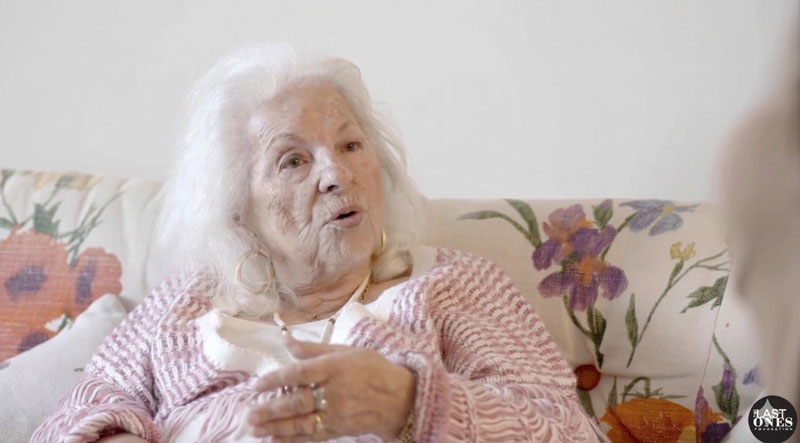
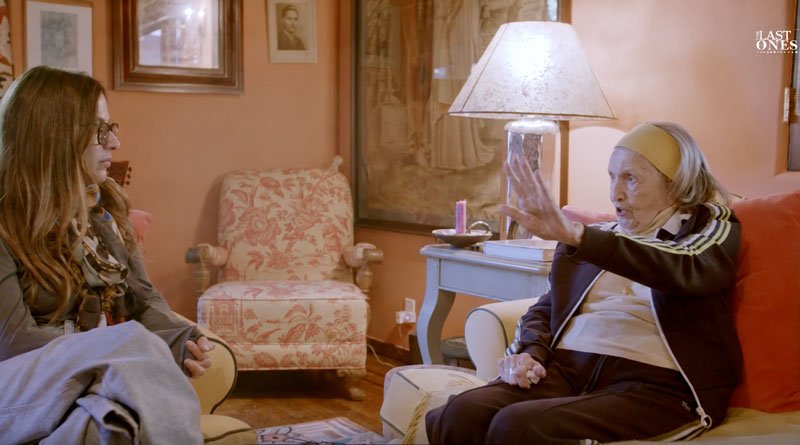
Leslie: Today I am in Caracas, Venezuela, visiting Julia. She was born in 1935 in Yugoslavia, in a city called Pristina, now the capital of Kosovo.
Leslie: Hello, how are you? [Opening exchange partly unclear in source.] Thank you for welcoming me into your home. I’m Leslie. Your home is beautiful.
Julia: Thank you. You know, I have many works of art.
Leslie: That’s what I see.
Julia: I worked for seventeen years at the Museum of Contemporary Art with Sofía [surname unclear in source].
Leslie: Really?
Julia: Look at this. It is two hundred years old. My great-grandmother gave it to my grandmother… [Family sequence unclear in source.] My mother had it. I was born into a family where we spoke [unclear in source] Ladino, the Spanish of the fifteenth century.
A Sephardic Family in Pristina
Leslie: The family fled Spain in the fifteenth century, when Isabella the Catholic expelled the Jews.
Julia: My mother. Moshe, the little brother. José, Yuso, the older brother, and another older brother. Matilda. [Names and photograph references unclear in source.] My grandfather, grandmother, father, mother, and six siblings lived in our house. We were a very happy, cheerful family.
Leslie: Was your family religious?
Julia: Traditional. We celebrated all the holidays.
Flight to Albania
Julia: In 1940, people spoke quietly at home. Everything seemed like a secret between my mother, father, and grandparents. They knew that in Belgrade, the capital of Yugoslavia, and in many countries, people were hating Jews and killing them.
Julia: At the end of 1940, my grandparents decided that my father and the whole family should move to Albania, because they were rounding up all the Jews and killing them.
We lived in Albania for two years. In ’43, the Albanians began asking why so many Jews were coming from Pristina. They learned that the Germans were pursuing them, and they were also afraid of being caught. The Albanians took the men and put them all in prison.
Leslie: Her father and two of her brothers were imprisoned in Albania, while Julia and the rest of the… [Sentence incomplete in source.]
Deportation and Imprisonment
Julia: [Unclear in source: reference to returning to Pristina in March.] At night… “Raus!” they shouted. [Unclear in source.] We slept in our coats. We were afraid. Then they put us on a train. Three or four elderly people died on the train. They took them and threw them out.
Leslie: They were taken to a camp [camp name unclear in source], near Belgrade.
[Unclear in source: reference to Zemun and Croatia.] We knew that they had captured us because we were Jews, and that they were going to kill us. We spent a month in a large shed. It had white walls, and on the walls it said, “Benjamin Klein died here.” Everywhere on the walls: “Died here. Died here. Died here.” I think about ten people died there.
Leslie: They were sent to Bergen-Belsen by train and completed the journey on foot.
Life in Bergen-Belsen
Julia: Three or four people died on the way. They tried to help others who could no longer walk. They put us into a large room and shaved everyone’s hair with clippers. If a child moved even a little while they were cutting their hair, they hit the child with the clippers, and blood streamed out. You weren’t allowed to move. You had to stay still.
At six in the morning, they shouted, “Appell! Appell!” We went outside into the yard and stood in rows of ten. The Germans came to count us. Until the count was exactly right, we couldn’t leave roll call. Sometimes it lasted four hours.
People began dying. They gave us soup, hot water, and a small slice of bread a day. Moshe, my brother, worked taking the dead out in the morning and carrying them to that mountain.
We were living corpses. I would pull my skin like this, and it… There was only skin, like a little cloth covering a corpse, the bones. There was nothing. No fat. Nothing, nothing. A corpse.
The little boys who were with me climbed over the corpses. A boy would open a dead person’s hand, and if there was a little piece of bread left, he would eat it.
There had been a very large group of children, and [unclear in source: how many remained alive]. Those who worked a little in the kitchen—my mother worked there—sometimes stole a carrot or something, and my mother gave me a little more food. That is how we survived.
Living Among Death
Leslie: Her mother, her sisters, and her younger brother survived, but the rest of the family was not so fortunate.
Julia: My grandparents died after a month in Bergen-Belsen. I walked past my grandfather’s bed, and he looked at me as though I didn’t exist. Like someone dead. He looked like a corpse.
There was a mountain full of corpses, and I saw them. At the time, it wasn’t a tragedy to me. It was happening everywhere. Everyone was dying. “Look, my little friend died. That uncle died. This one died. That one died.” We all lived among death. I wasn’t anything special who would not die.
The Evacuation Train
Leslie: In 1945, as the Allies approached, the Nazis began evacuating the camps.
Julia: We spent fifteen days on that train. So many people died.
Leslie: Because there was no food, no…
Julia: No. They couldn’t get through because they were approaching. The war was ending. It was 1945. There was nowhere to go. Americans and Russians were coming in from every side.
One morning, we woke up, and we were alone. The Germans had escaped. The people driving the train had gone.
Leslie: They spent several months in a village under the protection of Russian troops before being repatriated to Yugoslavia. [The source describes them as hidden; intended wording should be checked.]
Reunion and a New Life
Julia: They told us that my father and brothers were alive. When the train came to Belgrade, they already knew that we were alive. We hugged, kissed, and cried. Others cried because their relatives were dead.
We went back to Pristina, and things were all right, but the communists… Communism was very strong. Very strong.
Leslie: The family left for Israel, where Julia met the man who would become her husband. Together, they emigrated to Venezuela, where they built a new life and a family.
Speaking Out for Future Generations
Leslie: Was it easy to go on with a normal life?
Julia: At first, they were happy to have come out of the hell that was the Holocaust. We forgot about the war, as you say. They were happy to have stayed alive. The world has always had antisemitism. Always. We must not remain silent. In the Second World War, everyone closed their mouths and stayed silent. They said nothing afterward.
Now I want everyone to know that they killed one and a half million children, six million people. For one word alone: Jewish. There was no other reason.
Leslie: Julia, it was a pleasure to meet you. Thank you for telling me your incredible story.
Julia: I felt very good talking a little about these things. Thank you. You are unique, very special. Goodbye, and thank you. May things always go well for you.