A Childhood in Hiding, a Life Rebuilt
An Interview with Régine
Meeting Régine
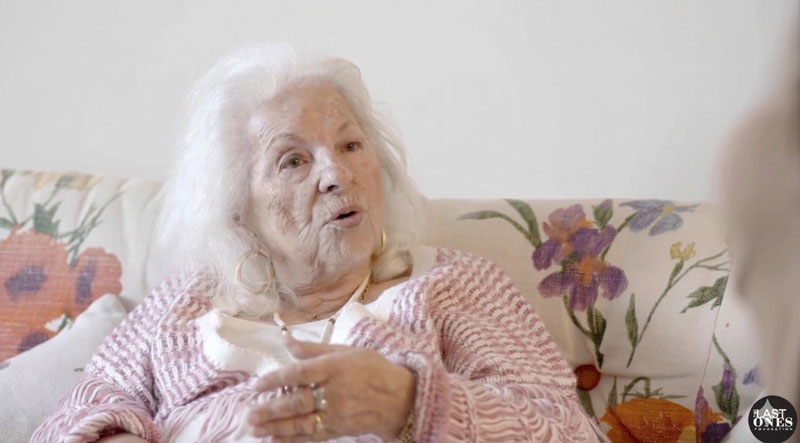
Leslie: Today I am in Tel Aviv to meet Régine. She was born in Paris in 1934 to parents of Polish origin. Five years later, they had a son.
Régine: Hello!
Leslie: Hello, Régine! I’m Leslie. Nice to meet you. How are you?
Régine: Nice to meet you.
Leslie: Are you well? I brought you a little something.
Régine: A little treat. Thank you. Thank you very much.
Leslie: Are those your parents there?
Régine: My parents and me. They were both born in Radom. [The next sentence about France and the war is unclear in the supplied transcript.]
Leslie: What was your parents’ surname?
Régine: [Surname transcribed as “Novopolsi”; spelling unconfirmed.]
Leslie: Nowopolski? And their first names?
Régine: [First name transcribed as “Shaumeau”; spelling unconfirmed] and Génia. But when they obtained French passports, they applied to change their surname. It became Novo [spelling unclear]. My father used to say, with his accent, “Monsieur, do you know my name? Novo. And do you know how it’s spelled? A-U-L-T, like Renault.” He was proud.
Leslie: That’s so lovely. Yes, that’s France. Perhaps they thought, “We’re leaving Poland. We’ll be happy in France. We won’t have any problems.”
Childhood and the Yellow Star
Leslie: The family lived in [neighborhood unclear in the supplied transcript]. Régine’s parents made leather clothing.
Régine: It was modest, but very pleasant. Our parents loved us very much. They did everything for us. They had put money aside in case someone became ill, needed extra lessons, or needed to learn more French. They had saved money, because at the time the state did not [sentence incomplete in the supplied transcript].
Régine: When I arrived at school wearing the star for the first time, I cried my eyes out. Why? Because I took it as a punishment. When the teacher saw me, she took me under her wing and kept me close to her for several days. I was the only one.
Leslie: Did it feel like a humiliation?
Régine: Yes.
Leslie: Was it your mother who sewed it onto your clothes?
Régine: Yes. My mother sewed it on, and we had to buy the star with textile ration coupons. We had to ride in the last carriage of the Métro.
Her Father’s Arrest and Life on a Farm
Régine: One day, a decree was issued requiring Jews to register. Then they sent letters, summoning people. My father was arrested and taken to Pithiviers. In the camp there were hundreds of young men doing nothing, while the farmers needed workers. I don’t know whether my father volunteered or whether someone came looking for him, but he went to work for a farmer. My father came to an arrangement with him. He asked him, as a kindness, “May I bring my family here? They have nothing to eat.”
Leslie: Do you remember what life was like on the farm at Pithiviers?
Régine: Yes. We were little, so we spent time outside, enjoying the fresh air. My mother worked in the kitchen, peeling vegetables and so on, and my father worked in the fields.
Leslie: Where did you sleep?
Régine: On a straw mattress, but we were happy. Then the farmer received a [notice; wording unclear] telling him he had to send his worker back. My father said to him, “Listen, I brought my wife here. You see, she doesn’t speak French very well. Let me take her home.” He took us back to the apartment, and then he escaped to the south of France. It was a good thing he did, because soon afterward they took everyone from there and deported them to Auschwitz.
Saved During the Vel’ d’Hiv Roundup
Régine: Then one day, at five in the morning—I lived in the 19th arrondissement, on Avenue Simon-Bolivar, in [location unclear]—I heard screaming. Screaming. What had happened? They had come to take people away, starting at five in the morning. [A phrase about the roundup is unclear.] Before they reached our home, the building caretaker took us by the hand and hid all three of us in a little storage room. When the Gestapo came upstairs to our apartment, we weren’t there. They knocked on the door. “Oh, they’re not here. Well, we’ll come back later.” That was the Vel’ d’Hiv roundup. It was July 16.
Leslie: July 16, 1942. So the building caretaker saved you?
Régine: Yes. Afterward, we gathered our things and left.
Leslie: Where did you go?
Hiding and Living with Fear
Régine: A friend of my father’s, a Christian, a very kindhearted man, took us into his home for a week or two. He lived in Nanterre. Then he became afraid someone would report him, too. He helped us cross into the unoccupied zone and took us to a little village in the Cher, where my aunt was hiding. We were all reunited there.
Régine: That was where I was baptized and went to school. I learned the catechism. Until the end of the war, I prepared for my First Communion. Even the priest knew it wasn’t genuine. [A phrase about the war is unclear.] He knew it was to protect us. But we all played along. Our parents did it to protect us.
Régine: What I felt—I realize it now—was that I lived in fear. I was terribly afraid, and it was a trauma that has stayed with me even now. Near where we were hiding, they rounded up two families—women and children, perhaps three families. They threw them into a well. It was French people who did this. They threw them into a well and piled stones on top. My father joined us. He came from the south; I don’t know how. He worked as a woodcutter.
Returning Home After Liberation
Leslie: And at liberation?
Régine: At liberation, the first thing we did was go home. Someone had taken our apartment and wouldn’t give it back. We couldn’t find another apartment. So we found a maid’s room on the fourth floor of the same building. The four of us slept in one bed, head to foot. We weren’t unhappy. But four times a day I walked past my own apartment, and he wouldn’t give it back. He took advantage of it for almost two years.
Leslie: Did you continue your studies afterward?
Régine: No, we couldn’t. We had to work. I worked making leather clothing.
Building a Family and Finding Joy
Leslie: Not long after the war, Régine met Maurice, another survivor.
Régine: Here we are. I had just got married. This is my wedding. [Wording fragmentary in the supplied transcript.]
Leslie: You were 19 here. How old was Maurice?
Régine: Twenty-four.
Leslie: They had two sons, Marc and Laurent. The elder attended Harvard, and both sons later took over the family business, which had become a fashion empire.
Leslie: Despite everything you both went through, were you able to build a home filled with joy?
Régine: Yes, thanks to the children. They wanted to live. So we followed their lead. What else could we do? Well, I’ll say goodbye. It was a pleasure to meet you.
Leslie: Thank you very much. Take care of yourself.
Régine: [Closing phrase unclear in the supplied transcript.] Bye.