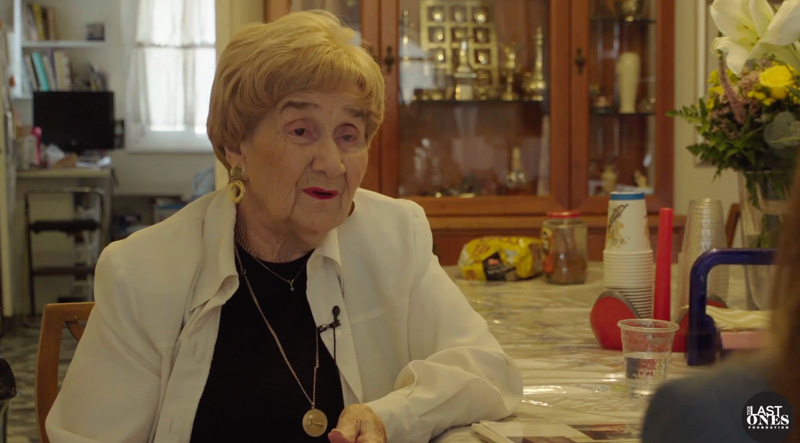
Finding His Way Back to His Family
An Interview with Jozef
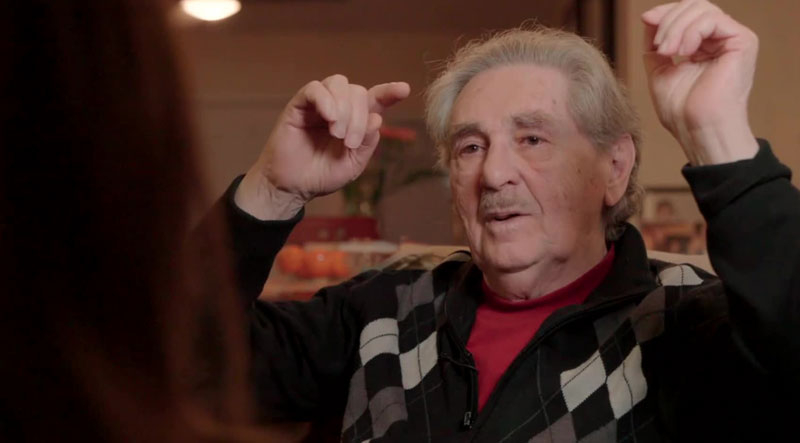
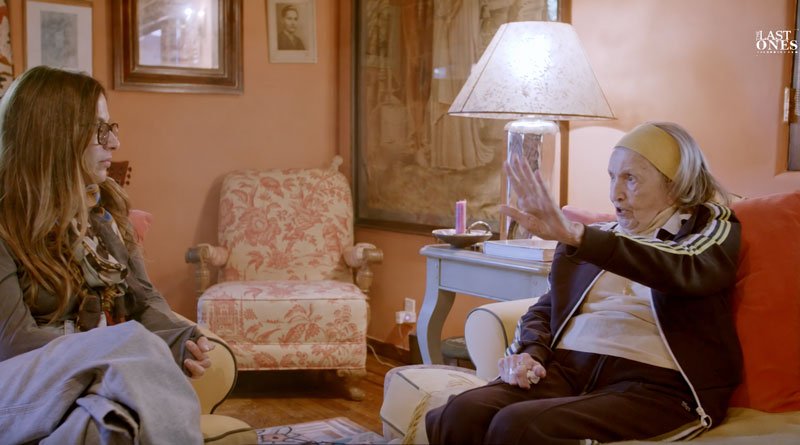
Leslie: Today I’m in Toronto, Canada and I’m going to visit Jozef. He was born in 1934 in a small village in Czechoslovakia.
Jozef: Hello.
Leslie: Hi. How are you? I’m Leslie. Nice to meet you.
Jozef: Nice to meet you.
Leslie: Hi, Brenda. How are you?
Brenda: I’m fine.
Leslie: Thank you for opening your door to me. I brought you a little uh a little something. A little babka.
Jozef: Thank you very much. Thank you.
Speaker unconfirmed: Thank you.
Leslie: No problem.
Family Photographs and Childhood Persecution
Jozef: Yeah, that’s are pictures from my family. My mother and my father in Slovakia. This kid is me and my mother. And this is the older sister which was murdered in Auschwitz. The Slovak
Jozef: fascist were as bad as the German even in certain way worse. There was situation that about four guys much older than me. They wanted to kill me
Leslie: because you were a Jew.
Jozef: Yeah. They I was not swimmer and there was a a river and they took me and they threw me like a piece of matter to the to the river. I came out and they started to do it again until I would be exhausted and I would die. They were so soaked by the propaganda, anti-Jewish propaganda, the Nazi fascistic propaganda that they they saw in Jews that we are like devils.
School Segregation and the Loss of His Sister
Jozef: In 39, I was already kid who could feel what is happening. Adult people were crying. I was looking my goodness what is it and that was at the time when those fascist Slovak fascists came to power almost immediately they didn’t allowed Jewish kids to go together with non-Jewish kids we were in Jewish school separated the first change
Jozef: I saw when suddenly my sister second sister had had a paper that she has to go away to work. But the older sister Alice, she said, “I go. You are not strong enough.” So she went instead of her. But it was lie. They took the Jewish girls to Auschwitz. Jewish girls from Slovakia. They were building that camp, physically building the camp. She died from bad eating and overworking and bad food and so she had typhoid fever and she died.
Jozef: My sister Rana until end of her life she was having guilt and complex that her older sister died instead of her.
Life in the Nováky Camp
Jozef: I was uh lucky that my father was handyman. They took him to build the work camp and concentration camp Nováky. Otherwise, he would never met me because I would be in Auschwitz like the rest of of my three uncles with his families.
Jozef: We were there about two and a half years. And then was a Slovak uprising against fascism created by Soviets. We were liberated by partisans. They gave us about two hours to leave because they need they needed the the camp for themselves. Those barracks.
Arrest and Interrogation
Leslie: When leaving the camp, Jozef is very ill. They decide to take the risk of returning home to care for him.
Jozef: And suddenly I hear hands up. There
Jozef: was a Slovak fascist and a German, two of them aiming on me. And if I would run, they would kill me. So I put my hands up and I look and I saw behind them was a mamzer of one [word or name unclear in captions] family which were occupied our house. His motivation was that if I would survive I will kick them out from the house. So he would like that I would be killed.
Jozef: So they took me to Gestapo. You have to say truth. And he was pushing his his gun so strongly that I have pain from it. If you don’t speak if you don’t say truth, I’ll kill you. I said I’m saying only truth. But I was not saying truth. I was lying. Where are my parents? Where are partisans? Where is this and that? So, and then repeating repeating and then they put me in the jail. Very special guy. 11 years old in jail.
Deportation to Theresienstadt
Leslie: Jozef is then deported in cattle cars.
Jozef: We went 4 days. We were packed like like chickens. If it will be the summer in hot summer, then at least half of us will be dying there.
Leslie: He arrives at Theresienstadt, a showcase camp used for Nazi propaganda.
Jozef: So they put me with kids from Holland. They created a special kinder to show it to the international red cross that how those bloody Jews are living in during the war in fantastic place twice came their international red cross to see how we are fantastic.
Leslie: Mhm.
Jozef: And we had better food that day. Of course.
Jozef: Of course. And day before or two days before they told us you have to say everything is fine. You have good food, enough food, everything because if you would say something negative they can take you and they can kill you. Okay. So
Liberation and Reunion
Jozef: they they prepared us. We were liberated the last moment of the war in May 8. Came out from the ghetto. We saw the tanks, the Russian tanks were liberated by Red Army and we were very thankful for that.
Leslie: After the war, Jozef returns to his village with the faint hope of finding someone.
Jozef: I knew that is occupied, but I went to the neighbors.
Leslie: Who were your friends since you were?
Jozef: They told me that my parents are here. They were by other neighbors there. And I came and and they they were like because they didn’t know that I’m alive.
Jozef: My poor father was going to one to other mass grave to look for my body. Can you imagine that? Afterward, he came he went through and then he had only one son and he he was looking for my body in in mass graves and and suddenly I I came.
Leslie: How you met again?
Jozef: I cannot describe it. I was like in heaven. They asked me everything and where I was and everything and and we started our lives.
Breaking the Silence
Leslie: But this story that you shared with me, did you share it with your parents?
Jozef: Never because we we we didn’t want to speak about that. Nobody wanted to speak.
Leslie: Well, it’s my duty now cuz you you hand your story to me, so I’m going to take care of it. Thank you so much.
Jozef: Thank you.
Leslie: Bye.
Jozef: Bye. Bye.