A New Name, a Life Rebuilt
An Interview with Jackie
A Visit with Jackie
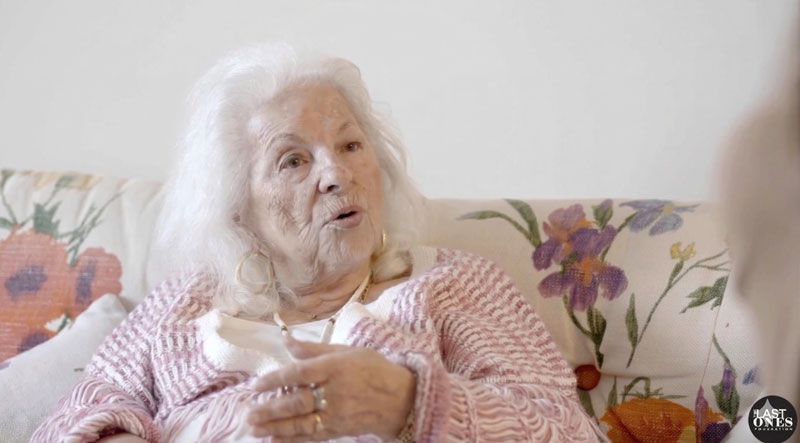
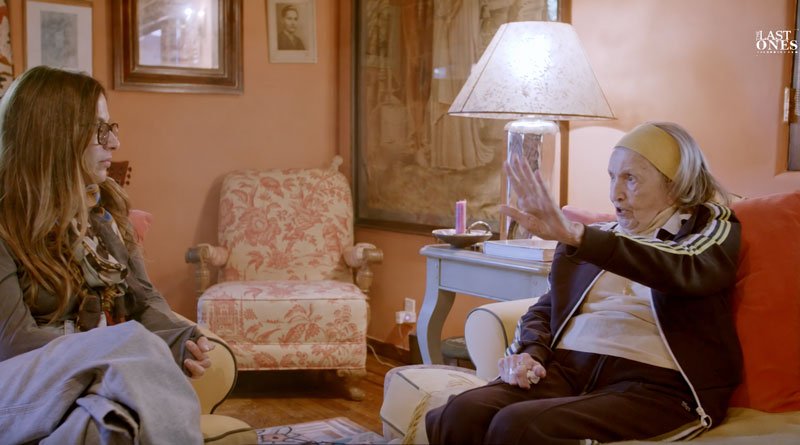
Leslie: Today I am in Paris, and I am meeting Jackie. She was born in Warsaw in 1924 under the name Rivka. She arrived in France at the age of three with her parents and older brother. This is a particularly personal interview for me because I have known her since my earliest childhood.
Leslie: Hello, Jackie.
Jackie: Do you recognize me?
Leslie: Wait, let’s have a good look at each other. Yes, of course.
Jackie: I recognize you.
Leslie: Yes.
Jackie: You haven’t changed much. I’m going to give you a kiss. How are you?
Leslie: Yes, I’m all right. Well, we keep going, don’t we? But wait…
Jackie: You look wonderful! Honestly.
Growing Up in Paris
Leslie: Jackie’s family, who had modest means, settled in the 19th arrondissement of Paris. Her father worked in the garment trade, and her mother was a nurse. Neither spoke French.
Jackie: When Mama needed to go and deal with her papers and things, they took me along, and I did the talking. The woman would say, “Who is this little girl speaking?” My mother would say, “She’s my little girl.” “Well, she speaks for you.” And I spoke for her. She told me in Yiddish, and I repeated it to the woman in French.
Jackie: My mother used to say, “My daughter could go to the ends of the earth.” Even though I was so little, I could explain things. I went to the Rothschild school, the Jewish school. We went to synagogue on the High Holidays. My mother took me. There was a little bench, and I sat beside her. I went to synagogue with her.
The Arrest of Her Parents
Leslie: Jackie was a teenager when her life changed completely.
Jackie: I came home from school and went upstairs. My mother was there, and she said, “They came to get your father.” It was during the German occupation. They had taken him to work. That’s what they said. Like a child, I said, “All right, Mama.” That was what she told me, so I had to believe it.
Jackie: Then one day, a year or six months later, my mother was taken away. They came to get her too. The door was closed. There were seals on it. A neighbor told me, “They came. They took your mother.”
Jackie: I had an aunt, so I went to see her. She knew what was happening at the time, and I stayed with her for a while. Afterward, I had false papers. They had false papers made for me.
Living Under a False Identity
Leslie: Who had the papers made for you?
Jackie: A friend of my cousin’s. He probably did that often.
Leslie: What name was on your false papers?
Jackie: Jacqueline Guillaume.
Leslie: So before, your name was Rivka [surname unclear in source: “Tâche Bloom”], and afterward you became Jacqueline Guillaume?
Jackie: Yes.
Leslie: Did you have clothes with the yellow star?
Jackie: Yes. After I changed my identity, my identity card, I no longer wore those clothes. I took the stars off. With my false papers, I left for Lyon.
Jackie: [Unclear in source: passage about going to Lyon and learning leatherwork.] I had seen that work, and I thought, “If someone asks me, I’ll know how to do something.” I found a job in Lyon, near what was called Place d’Harcourt at the time, I think, on a little street. That was where I was hired.
A Stranger’s Help in Lyon
Jackie: There was a café on the corner. One day I was at the café. It was my turn to go and fetch something, and I had barely arrived when the Germans came in. They asked for papers.
Jackie: I didn’t have any papers. I looked at the man, and he understood. When they came to me, the man said, “She’s my fiancée.”
Leslie: He saved you.
Jackie: That was a stroke of luck. I wasn’t terribly fearful. I was quite… I don’t know. I had confidence in myself. It’s strange.
Marseille and Liberation
Jackie: Afterward, I went to Marseille. I was an apprentice, and I worked there. I had made a little group of friends too. Three-quarters of Marseille had been liberated, but I was in the Pharo area, by the sea, where there were still Germans.
Jackie: We all said we would take pillows. When evening came, we would run down a very long street. We did that one evening. We ran, and when we reached the other side, it was free. Then we were free.
Leslie: That’s how you got out, with a pillow on your head?
Jackie: Yes.
Leslie: What was the pillow for?
Jackie: If they shot, we had something in front of us, on our heads. [Final wording unclear in source.]
Leslie: And afterward, you were liberated.
Jackie: I remember seeing people who were happy, people on carts, singing.
Leslie: What were they singing? “La Marseillaise”?
Jackie: Yes, yes. That’s it.
Returning to Paris and Meeting Her Husband
Jackie: Afterward, we returned to Paris. I found my brother again. At the time, he was engaged. I joined him with his fiancée’s family. They were lovely to me and helped me a little.
Jackie: One day, there was a LICRA evening event, and my brother and sister-in-law were going. I asked to go with them. My brother said I was too young to go to an evening event. My sister-in-law said, “No, we’re taking her.”
Jackie: We took the Métro. Opposite us, there was a young man with a young woman. My brother knew them, and he went over to say hello to the young woman. He introduced me to both of them. Three months later, I was married to the man who was there.
Leslie: No!
Jackie: Yes.
Leslie: That’s how you got married?
Jackie: We had a religious wedding.
Leslie: In three months?
Jackie: Yes. But we were serious. We knew it was right for us. I didn’t think it could go wrong. I had an extraordinary husband in my life. There you are.
Remembering Her Parents
Leslie: What did you miss the most?
Jackie: My parents. Family.
Leslie: But were they never able to tell you what had happened to your parents?
Jackie: No. They didn’t need to tell me. I understood. It was the concentration camps. Everybody knew. People died in the concentration camps.
Jackie: That’s how it was… [Unclear in source.] We were young girls. We didn’t understand things as you do when you’re older. We didn’t think that harm could happen. I don’t know. Now it’s very different. There you are.
Looking Back
Leslie: Jackie, I’ve asked you lots of questions about your life today. Did it upset you?
Jackie: No, it didn’t upset me. It made me think back a little, but it didn’t upset me.
Leslie: [Yiddish farewell rendered “Zy Megazint” in the source; wording to verify.]
Jackie: [Reply unclear in source.]
Leslie: Likewise. If you like, I would love to be there for your [word unclear in source; possibly a reference to her hundredth birthday].
Jackie: All right.
Leslie: Thank you very much, in any case.