A Command to Live
An Interview with Ruth
Meeting Ruth
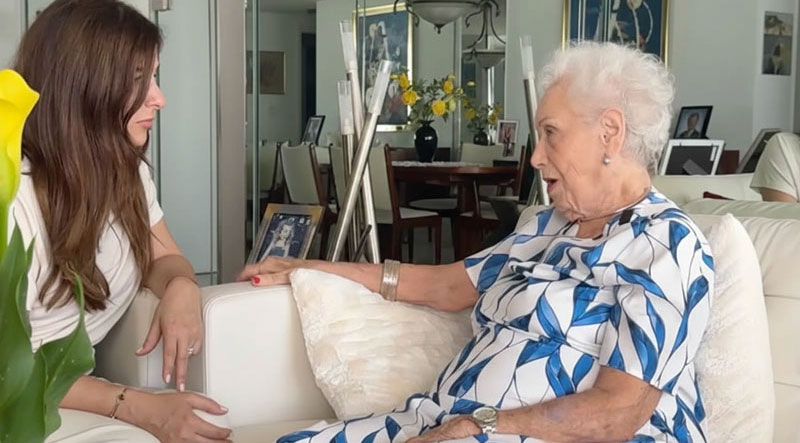
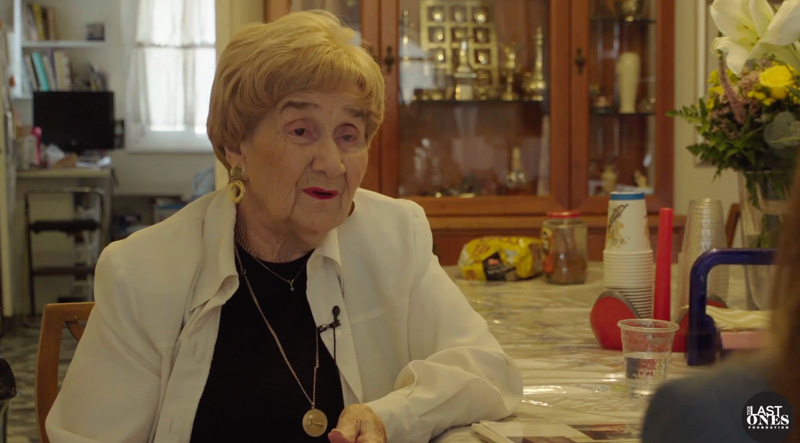
Leslie: Today I’m in Florida and I’m going to meet Ruth. She was born in 1930 in Czernowitz, then part of Romania.
Leslie: Hi Ruth.
Ruth: Hi.
Leslie: Wow, you look so pretty. I am very I feel very special. How are you? It’s so good to meet you finally. You look amazing.
Ruth: Yeah. Yeah. All
Ruth: my mother. This is the only family picture I have and it appeared in the herald
Leslie: At 95, the memories haven’t faded.
A Childhood in Czernowitz
Leslie: So tell me about your childhood.
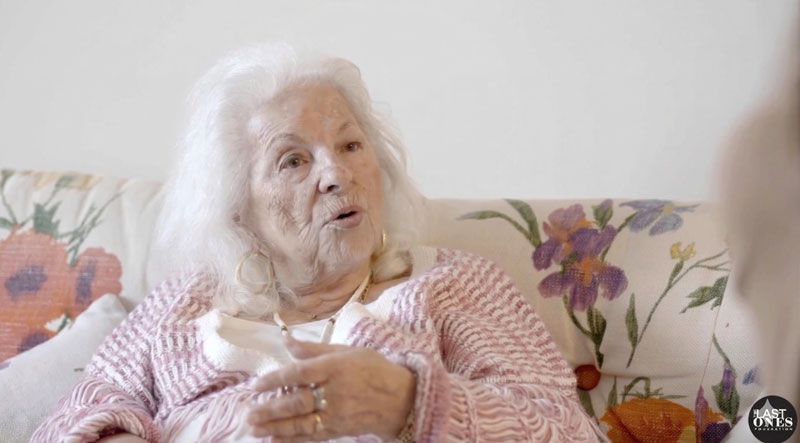
Ruth: My father which was my idol. He was an intellectual and he was very honest. It does sometimes it doesn’t pay. and I had a very very lovely childhood. We had a summer vacations at my grandfather’s farm uh which was a paradise and my brother was seven years older. So I had like another parent. He was a childhood prodigy on the violin.
Leslie: Oh yeah.
Ruth: His name was [brother’s given name unclear in captions].
Leslie: [Repeats name; unclear in captions.]
Occupation and Persecution
Ruth: But we called him Booby. So in that time 1940 the Soviets marched in and all our lives took a change. The only positive thing is that there was the end to anti-semitism because Romania was very anti-semitic.
Leslie: You have faced anti-semitism yourself.
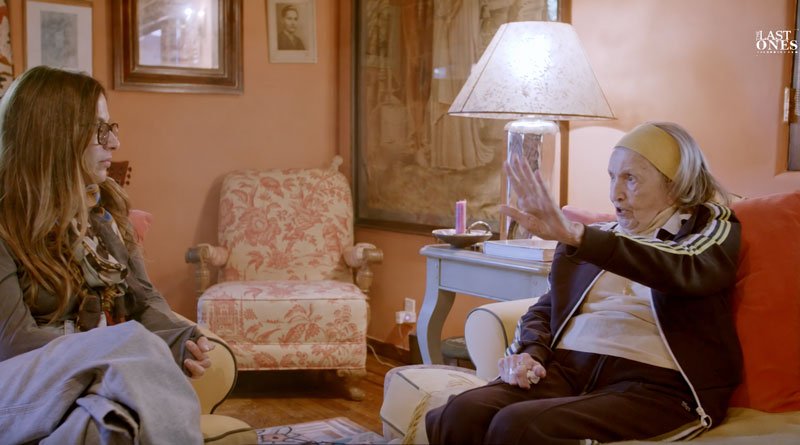
Ruth: Yes. Remarks you know dirty Jew or whatever something like that. And then 1941 you know the war broke out. the German and [unit name unclear in captions] marched in together with the the Romanians and the Germans allied themselves and uh when they entered our town right away there was killing on the street. There was curfew.
Leslie: By 1941, pogroms were raging across the country. Jews were rounded up and forced into ghettos.
The Ghetto and Deportation
Ruth: every Jew of the whole town. They pushed us into an area of ghetto in which probably 10,000 people would fit, but we were 50,000.
Leslie: Wow. And crowded.
Ruth: It was already overcrowded. Families of two, three in one room, no food, no hygiene facilities. It was terrible that from that ghetto they were starting the deportations and the deportations were to Transnistria. This Transnistria to be the killing field of all the Romanian Jews. And off we went into the unknown.
Leslie: Soon after deportations began. Jews were transported for days under inhumane conditions or forced to march for 2 weeks 16 miles a day in the freezing cold towards Transnistria.
The Journey to Transnistria
Ruth: The Romanians were not prepared for genocide.
Leslie: You mean they were not organized like the Nazis?
Ruth: Like the Germans? No, they did not know about gas chambers. And so they did it in on a primitive way. They thought if they were going to march us during the snow and the cold without food and without shelter and without water, we will die on the way. And I remember my very first horror experience was when I was on one of those wagons and I saw bodies of frozen people who could not continue.
Leslie: The Holocaust in Romania claimed more than 330,000 lives
Finding Shelter
Ruth: until we finally reached the little town of [town name unclear in captions]. So whoever had a little bit of money left bribe them to let us stay in [town name unclear in captions] and not drive us over the [river name unclear in captions] where the Gestapo was real killing went on. There was a [word unclear in captions], and in that [word unclear in captions] there was a ghetto where all the Jews lived, the local Jews but [phrase unclear in captions] we couldn’t find shelter because on every door we knocked they would you know they spoke Russian so they would answer [Russian words unclear in captions] meaning typhoid.
Ruth: We found a little ruin of a house. No doors, no windows, dirt floor. And we went in. At least it had a uh a roof. It was winter was December 1941, below zero degrees. We went in about 28 people.
Leslie: 28 people in one room
Ruth: on the floor on the floor one top of other and etc. I don’t think that people can imagine what it meant. 28 people died one by one extinguished like candles. You didn’t hear any screaming, any crying, any moaning. They just died quietly. All of them.
Leslie: I’m sorry to ask you this. So, your dad is the first one who who died?
Ruth: My dad first, my brother second, my mother third. all in three weeks in front of my eyes.
Ruth: And I tried to keep my mother alive. So I would push her every time, say, “Mom, mom, mom.” And she would answer until she answered, “No more.” And then I screamed, “Dr. [surname unclear in captions].” And you know what? He didn’t even open the door from the other side. He said too late. People became like stones.
Ruth: They didn’t come to collect the corpses because there were too many. They could not bury them because the the soil was frozen.
Leslie: It was winter, of course.
Ruth: So, they dropped them just on the frozen soil. Can you imagine an 11-year-old girl, okay, watching the corpse of her family in front of her? Is that something that somebody can describe? And my mother was a kind of [word unclear in captions]. She said, “Everybody in this room will die except for Ruti.” So that was some kind of a command for me.
A Command to Live
Leslie: You have to live.
Ruth: I have to live. I don’t know how I survived all the illnesses that I had without shelter, without food. And I don’t believe in miracles, but I am a miracle.
Leslie: Ruth was taken in by an orphanage in a small village.
Ruth: I stayed on the orphanage quite a while. Meanwhile, I took care of a little girl who died in my arms. And that was another I said, “God, you take away everything from me. Everything.”
Leslie: How old was she?
Ruth: Maybe she was a year old.
Years in Orphanages
Leslie: Then she was moved from one orphanage to another all across the country. She recalls with a hint of irony a small anecdote from those wandering years a glimpse of innocence that somehow survived.
Ruth: So how do you adopt out of 500 children? How do you pick? You know it’s really the theater of the absurd. So we had all these people like in a theater and we were on the on the stage and one was dancing and one was singing and I did both. I could sing and dance. So I was a big asset. So there were two families who wanted to adopt me. Okay. I said I’m sorry I am now already what 14 years old. Mhm. I’m not going to call anybody mommy or daddy.
Finding Her Aunt
Leslie: When when the war ended, the Soviets decided to transfer the children to the USSR.
Ruth: And we arrived to Odessa back to mother Russia. And they said there is a Russian officer who’s looking for Ruth [surname unclear in captions] and told me you have an aunt Anna in [place name unclear in captions] who wants to adopt you. This was like a dream come true. I couldn’t believe.
A New Beginning
Leslie: From Ruth’s Kitchen with love.
Ruth: Mhm.
Leslie: We’re going to have it live. That’s cool. So, who taught you how to cook?
Ruth: Myself.
Leslie: Ruth eventually found her aunt and slowly learn how to live again. In 1946, through a Jewish organization, she boarded the ship to Palestine. But unfortunately,
Shipwreck and Detention in Cyprus
Ruth: in December, the little ship hit the rock and we were shipwrecked.
Leslie: Oh
Ruth: yeah. I did not arrive to Palestine. I was taken to Cyprus. I was again incarcerated for a year and three months. But I was with the commune.
Leslie: Yeah.
Ruth: So that kept us together like the gypsies, you know, in a circle and we continued our commune.
Building a Family
Leslie: On the island of Cyprus, she met her future husband. In 1948, they settled in Israel in a kibbutz where Ruth became a nurse. Years later, the couple moved to [city name unclear in captions], Colombia, where they built their family and a new life.
Holding On to Hope
Leslie: Was it very hard for you today?
Ruth: Yes. Very, very hard. You asked very tough questions.
Leslie: You’re not going to hold a grudge against me.
Ruth: No, no, no. I appreciate your work.
Leslie: Thank you.
Ruth: For a good cause. Maybe we can stop a little bit the hatred in this world. We have not lost our hope yet.
Leslie: Nope. You’re right.
Speaker unconfirmed: Thank you. Thank you for everything. You’re welcome. Be well. Bye-bye.