A Life of Survival and New Beginnings
An Interview with Arie
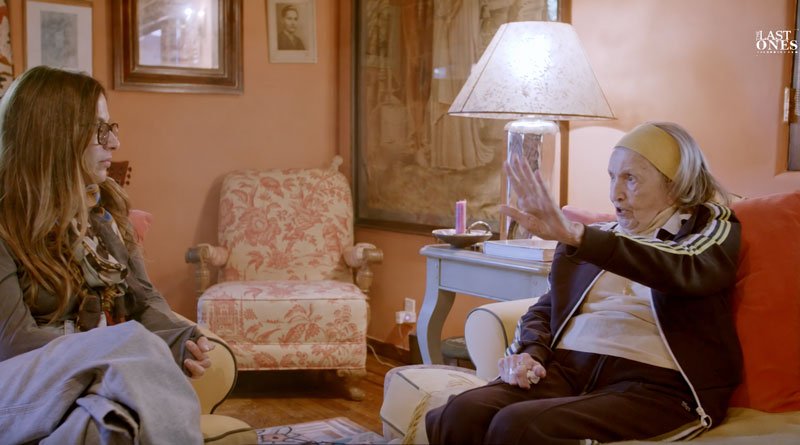
A Visit with Arie
Leslie: Today I am going to visit Arie in Caracas, Venezuela. He was born in Poland in 1929 and survived the war.
Leslie: Hello.
Arie: Hello, how are you?
Leslie: Good. I’m Leslie. Arie?
Arie: Yes.
Leslie: I’m a very, very big admirer. I’m happy to meet you.
Arie: Well, likewise.
Leslie: I’ve brought a cake. I hope you like it.
Arie: Hello, good afternoon. Hello.
Leslie: How are you? Hello, I’m Leslie. Hello, Leslie. [Unclear in source: reference to a mother.] Okay.
Leslie: So many photos.
Arie: This is my brother.
Leslie: Yes. And here?
Arie: This is my…
Leslie: Grandparents.
Arie: Grandfather. After the war. In 1929, three kilometers from the border. In my childhood, I thought…My mother… the home, the food, the well-being…
Childhood and the Beginning of the War
Leslie: When did you notice the rise in antisemitism?
Arie: I can say that I did not feel it in our city, and I think many Jews did not feel it. But farther into Ukraine there was antisemitism, and it grew stronger every day.
Leslie: Can you tell me what happened in your home, in your life, on that very day?
Arie: There were horses on the estate, and many dairy cows. On my birthday, my father took my hand and told me, “It’s all over.” My father called the Ukrainians in our community. “Take whatever you want. Take all the animals.” [Unclear in source: reference to starving.]
One night they came looking for Hershko Birnbaum. Our neighbor was also named Birnbaum, and he shouted, “I am Jaim Birnbaum, not Heshov Birnbaum.” They left him, and he said, “The house next door.” But my father had escaped to Romania. [Unclear in source.] The Russians wanted to imprison my mother because of that. [Unclear in source: reference to her heart and doctors saying she could not be taken.] My mother…
[Unclear in source: reference to finding my brother’s uniform, which resembled a Polish soldier’s uniform, and to someone being taken away.] For a long time, we heard nothing from him.
Life in the Ghetto
Leslie: You were ten years old, and your life changed completely.
Arie: Completely. I lost my father, who had escaped and was in Romania. I lost my brother, who was put in prison, and the two of us remained in the ghetto. [Unclear in source: reference to being put in the ghetto in August.]
Speaker 4 (unconfirmed): They called that place the ghetto.
Leslie: What was life like in the ghetto?
Arie: I kept myself going through work, but I was always hungry. Still, I kept going. My mother did too.
Escape and Survival
Leslie: You have said that sometimes you saw death up close.
Arie: I can say that.
Soon afterward, my mother was taken to Romania. They promised her that they would bring her son the next day. And I escaped from the ghetto. [Unclear in source.] My mother was no longer there. I had nothing left in the ghetto.
Leslie: And you were alone?
Arie: Yes, alone. [Unclear in source: reference to Jews being rounded up on the second day.] One day a Ukrainian policeman stopped me and put me against a wall where other people were already standing. We knew what that meant: death. Suddenly, a young woman approached the young man and said, “You are going to become a murderer. You are going to kill people. The whole town will stop speaking to you.”
Arie: [Unclear in source: reference to a Nazi superior.] She spoke to him, then came over to me, took me by the sleeve, and brought me into the ghetto.
Leslie: She saved your life. She saved your life.
Arie: One hundred percent. Otherwise, I would not be here.
Leslie: You said that you saw death all the time.
Arie: In the ghetto, two days would pass, then a third: hunger, only water. I had no food. I slept in the street. I had nothing. In the street, you walked on blood. [Unclear in source.] I escaped again, and they took me to the unit. The next day they gave me a rifle. About three days later, an order came to attack a train. [Unclear in source: description of the units sent to attack.] So, at twelve years old, I was already a grown man. I learned a lot. Eight months… many deaths, Jews as well as Russians, Poles, Ukrainians. They gave us plenty of vodka so that we would not think about the past. Of the hundred and some who went, sixty came back.
War and Reunion with His Family
Arie: Eight months passed. It was 1943. The Russians were advancing, and the Germans were killing without mercy. By early 1944, the Russians were already very close to us.
The commander came and said, “We no longer need partisans. You are going into the Russian army.” Three weeks later, I was already at the front. I was wounded by a grenade that exploded beside me, and to this day… [Unclear in source: description of a spinal injury.] In the morning, the lieutenant came over and said, “Aren’t you the brother of [name unclear in source]?” My brother. I said yes. He said, “I was just at the town hall, and there is a letter from your brother asking about you.” He brought me a bundle of letters, and I recognized his handwriting… [Incomplete in source.]
Leslie: How long had it been since you had seen him?
Arie: I had not seen him for five years.
We thought my brother might turn up at any moment. So I escaped to Romania, where my parents were.
Arie: When I arrived, they gave me food, and I saw hundreds of sheets on the wall, people looking for family. I found my father and mother.
Leslie: Do you remember that day?
Arie: That day was glorious. My mother cried out, “At least I have one of my children.”
Leslie: In ’45?
Arie: In ’45, the three of us were already together. My brother arrived in July, and when he came, it was glorious for us. But he began saying, “You don’t know what Russia is like. You don’t know what Russia is.”
The Journey to Venezuela
Arie: My brother knew a Russian lieutenant. He paid him to get us from Poland into Czechoslovakia.
Leslie: [Unclear in source: question about where the family would go.]
Arie: With our papers arranged, we left Romania as Poles and went to France. [Unclear in source: reference to entering a camp.] We waited in France for three months, and I went to Marseille.
Leslie: A ship?
Arie: We left Marseille by ship, heading for Tenerife. Another 1,500 Spaniards boarded there. Three weeks later, we arrived in Venezuela.
Arie: They began disembarking. [Unclear in source: reference to approximately thirty trucks and their lights.] We got down…
Leslie: To Caracas?
Arie: No—yes, to Caracas, but by bus. People opened their doors. “Come and eat. Have this, have that. Have a sweet, have some bread.” Food, food, and more food. They took us immediately… [Unclear in source.] They put us in barracks for the time being.
We were in Caracas for only three days. Then they found a little house for us. My brother was already married. A few days later, I saw a sign that said “Transporte Guzmán.” I went in, and they gave me a job.
We already had a home to sleep in and work. My father earned a little too, selling cigarettes, selling sweets, whatever he could. And…
Leslie: Was there antisemitism?
Arie: [Unclear in source: reference to a girlfriend and three years.] We married in 1953. Years later, when I spoke Spanish well, I applied for Venezuelan citizenship. I wanted to leave the past behind.
Family and Memories of the Past
Leslie: I want to know how many children, grandchildren, and great-grandchildren you have.
Arie: Well, after we married… In ’55, a son, my eldest, who lives in Miami. My daughter in ’58, and another son… [Unclear in source: dates and the breakdown of grandchildren.] Ten grandchildren and twenty great-grandchildren. I think I gave my children a good life… [Incomplete in source.]
Leslie: You told me that you still had dreams.
Arie: I remember my wife waking me because I was shouting, “Fire!” [Unclear in source: description of waking and changing pajamas.] To this day I dream about it. Even last night, I had that same dream…
A Reflection for Future Generations
Leslie: Are you afraid that this history could repeat itself?
Arie: We have a secret weapon. Our secret weapon… [Unclear in source.] When they asked about a secret weapon, he said, “God.”
Leslie: Arie, thank you so much for inviting me into your home and telling me your story. Wasn’t it very difficult to talk about the past?
Arie: All I can do is try to… [Incomplete in source.]
Leslie: Thank you very much.
Arie: The most important thing. Without that, nothing is worth anything. [Context unclear in source.]
Leslie: Thank you for everything.
Arie: Take care. Goodbye. Thank you, thank you. Come and visit again.
Leslie: Okay. Thank you.
Arie: Thank you.