Prayer, Music, and the Will to Survive
An Interview with Freddy
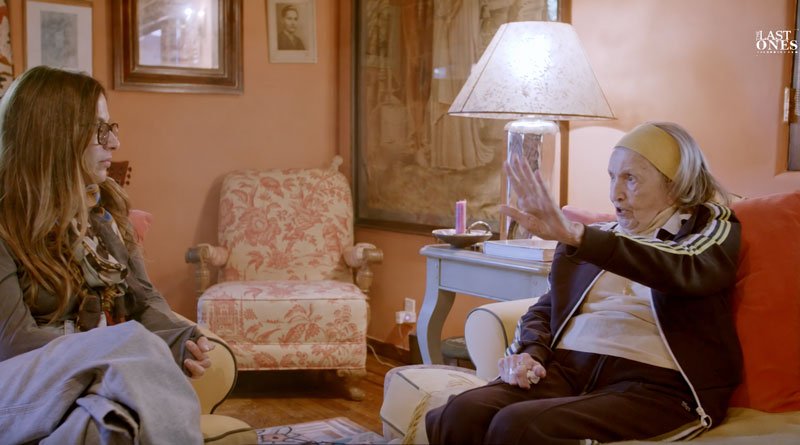
A Visit with Freddy
Leslie: Today I am going to visit Freddy. He was born in Vienna in March 1932. After the war, he found refuge in Venezuela, where he rebuilt his life.
Leslie: How are you?
Freddy: Hello. Welcome to your home.
Leslie: Thank you. Thank you so much. Your home is wonderful. I really like it here in Venezuela.
Freddy: Move here, and that’s that.
Leslie: Why not? I have to see what… [Incomplete in source.]
Freddy: You have no idea how many photographs there are here. That was when I did athletics in Vienna. But all of that was after the war.
Memories of Deportation
Freddy: I was on one of those transports in October. I don’t know which one. And I survived, because God is great. He is great. We never knew about the gas chamber. Never. It is one thing to see it in films, and another to live through it.
Freddy: Auschwitz was liberated on January 27, 1945. But they had already begun taking people out of the camp in October. I left Vienna on the night of October 1.
Freddy: When we got off the train—this was one of my saddest and most horrible memories—I was ten and a half, and my brother was five. My brother was frightened, and my mother was holding him. Then an SS man came and tore him from her arms. We never saw him again.
Childhood in Vienna and the Rise of Antisemitism
Freddy: My father’s name was Jacobo, and my mother’s name was… [Name omitted from source.] Ours was a very cheerful home. My father was more Austrian than Jewish. We went to synagogue… [Unclear in source.]
Freddy: My father always said, “Hitler won’t touch me, because I fought for Austria in the First World War.” We never considered leaving. But unfortunately, by ’38, when he arrived, there was no longer a chance.
Freddy: On March 12, 1938, Hitler came in, and hundreds of thousands of people were shouting, “Heil Hitler! Heil Hitler!” I saw him from a distance. We did not go closer because we already sensed that something was turning against the Jews.
Freddy: Imagine, Leslie, that you are in a group of children, playing with them. From one day to the next, they look at Leslie and no longer play with you. You are out of the group. That was in ’38. We were all in Vienna, and we were already beginning to suffer the consequences.
Freddy: My father was imprisoned. They began breaking the windows, the glass in the shops. It was what they called Kristallnacht, the Night of Broken Glass. That was when the real persecution began.
Freddy: There were two different periods of the Holocaust: when you remained in Vienna or elsewhere in Europe, and afterward, when you went to a concentration camp. They came with sticks and whips and beat Jews in the street. Later I found out… [Unclear in source: reference to asking about his grandmother.]
Leslie: In 1941, the Nazis began using gas vans: enclosed vehicles in which engine exhaust was directed inside to kill the occupants.
Freddy: My grandmother died in one of those vans.
Deportation and Moments of Humanity
Freddy: We had nothing to live on because we had no money left. My mother knitted children’s clothes. We lived on that until we were sent to the camp. We were there eight or ten days. I don’t remember well because I was very young.
Leslie: More than a week?
Freddy: More than a week, certainly. The one thing I do remember is the lovely evenings we spent there. Yes, it’s a curious thing. There was a courtyard. At night, we gathered there. Those were our musical evenings, but without instruments, only singing. Human beings are much stronger than you think.
Work at the Crematorium
Freddy: This was the concentration camp, and this was the Little Fortress. At first, the first prisoners were political prisoners, not Jews. The Jews arrived later, in 1941. I lived here. My mother lived around here. My father lived here.
Leslie: So everyone was separated.
Freddy: Separated, of course. We arrived… [Incomplete in source.] Here was the crematorium. Later, that was my last job: the crematorium.
Leslie: When you say a job, what did you do here?
Freddy: At the crematorium, I carried urns.
Leslie: How old were you?
Freddy: At that time, I was twelve and a half. The crematorium was here. We formed a chain to transport the bodies. They put them in open cardboard boxes, one on top of another. Sometimes they were not completely burned, and you could see pieces of bone.
Freddy: You have no idea how quickly you grow up in a camp. You were not a person. You had no name, Leslie. They took away your identity. You lived with hunger, with death, with misery. How to survive from one moment to the next, because there was hardly any food.
Freddy: The ration was 400 grams of bread for three days, and the bread was covered in mold. We put the bread on top of the oven to burn off some of the mold.
Leslie: Yes.
Freddy: But you don’t know how good that bread tasted. That little piece of bread tasted heavenly. Why? Because you were hungry.
Survival and Guilt
Freddy: I don’t know what happened at that moment. They asked my mother how old I was. “Twelve,” she answered. Beside me was a very close friend I worked with. He was a little older than I was. They told him to follow. He went to the gas chamber, and I survived.
Freddy: Sometimes you ask yourself how you survived. That feeling of guilt, you know?
Leslie: Yes.
Freddy: Do you understand? It’s a sense of guilt. Why am I alive here, and he is not?
Freddy: There were camps and extermination camps. There were only six extermination camps. The others were concentration camps or ghettos, where the Jews themselves had a certain amount of administration. But underneath it all, it was the same. They were not direct extermination camps, but people died just the same, of hunger and disease.
Freddy: Later, they made a film, a propaganda film: “The Führer Gives a City to the Jews.” In that film, you saw people living well. Women out walking, cafés, music, sandwiches.
Liberation and Reunion
Freddy: That May 7, we went out and… [Unclear in source.] I knew my parents were alive, but I did not know where they were. “Your parents are waiting for you in Q604.” That is why I know. When I arrived at Q604, my parents were there. I had not seen them for almost three years.
Freddy: My father was almost 1.78 meters tall and weighed 49 kilograms. He was skin and bones. We hugged and kissed. That was when I began to cry for the first time, there in Q604.
Freddy: The Russians gave us so much food, and my father, very wisely, said, “Don’t eat.” My father would not let us eat. People filled themselves up, and many died afterward.
Freddy: We hugged and cried, she and I, because we had survived a concentration camp. And now we come to the most tragic part.
Returning to Vienna
Freddy: When we returned to Vienna, the Nazis had taken the apartment we had in Ottakring. As a child, you had seen those people standing there shouting, “Heil Hitler!” Suddenly, those same people tell you, “I wasn’t a Nazi. I don’t know anything.” What happens then? You lose faith in people. You stop believing them. You lose trust in people.
Freddy: I graduated in Vienna in 1949, on December 11. Shortly afterward, we left for Genoa. There, we boarded a ship for Venezuela. We arrived on October 2, 1950.
Finding a Home in Venezuela
Freddy: We were on a bus… [Transition unclear in source.] I looked out through the hotel doorway and heard singing. The young people saw me and said, “Freddy, Freddy, come here. Sing with us.” I told them, “What am I going to sing with you? I don’t know…” “No, it doesn’t matter. It doesn’t matter whether you speak Spanish or not.”
Freddy: Those young people, who did not know me, accepted me as though I had been born with them, as though I had grown up with them. This country’s treasure is not oil, or gold, or… [Unclear in source.] It is the people, the character of Venezuelans.
Freddy: When I returned to Vienna several times and met my school friends, they would ask, “Have you come back to Vienna again?” I would say, “No. There is nowhere like Venezuela.”
Faith, Music, and the Will to Survive
Leslie: I want to know what saved you. Was it luck? Resilience? Determination? What?
Freddy: Hashem.
Leslie: What was the hardest thing to bear?
Freddy: The constant fear. What will happen tomorrow? The hunger, yes, but there was always someone who, when you were hungry, gave you a piece of bread, or someone I gave a piece of bread to, or someone you shared something with.
Freddy: Forgive, but do not forget. We are here to prevent it from happening again. Do you know what helped me, Leslie? Two things: prayer and classical music. I have pleasant memories of the concentration camp, of the friendships you make. What affected me most was the fear, the terror, the attacks. You no longer had any dignity.
Family and a Message for Future Generations
Freddy: I have three children from my first marriage. I was fortunate to meet Esther, with two princesses. I have wonderful grandchildren.
Leslie: Do you have great-grandchildren too?
Freddy: I have great-grandchildren.
Freddy: What is important is telling what happened to us, not only the Holocaust but the constant persecution for being Jewish. Being Jewish was enough to be persecuted. That must remain written in history for the next thousand years.
Leslie: Freddy, thank you so much for everything. It has been a pleasure to meet you.
Freddy: Thank you. Thank you for the work you are doing.
Leslie: And thank you for welcoming me into your lovely home. Was it very difficult to talk about the past?
Freddy: [Reply unclear in source: “No, no era pasado, no.”]
Leslie: Are you all right?
Freddy: I’m very well. Thank you.
Leslie: Thank you for everything. A kiss. Thank you.