From Silence to Sharing Her Story
An Interview with Judy
A Visit with Judy
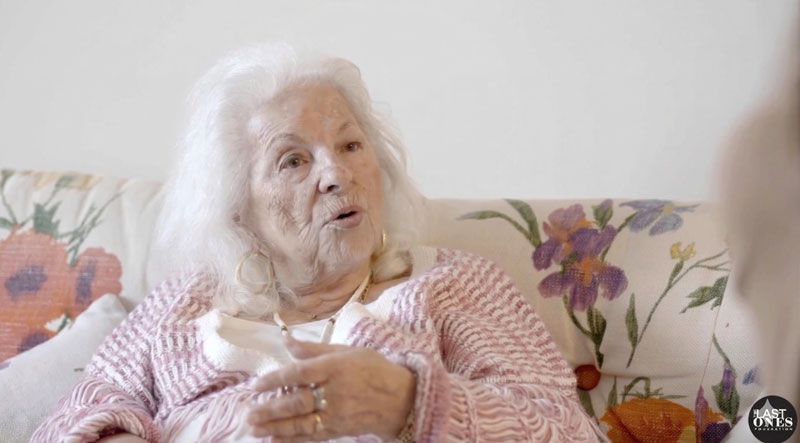
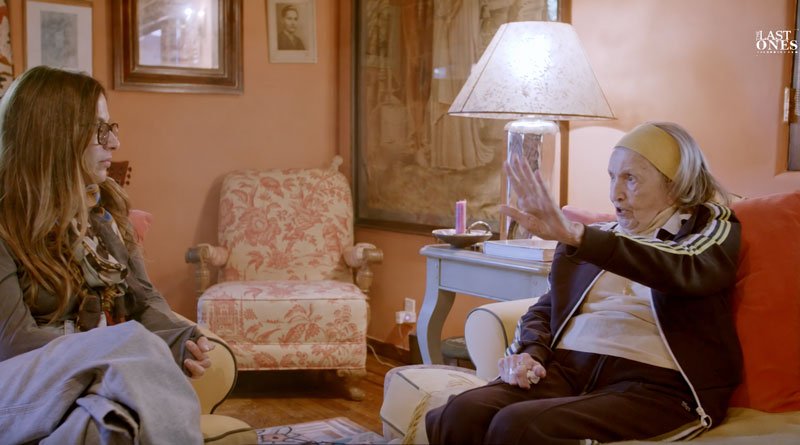
Leslie: Today I’m in Miami and I’m going to visit Judy. She settled here recently after many years spent in Venezuela.
Judy: Welcome.
Leslie: Hi, Judy. How are you?
Judy: Hey, beautiful. So good to see you again, Leslie. You’re prettier now than you were before.
Leslie: Oh, thank you so much. That’s so nice
Judy: I’m seeing better. That’s why.
Leslie: Thank you so much.
Leslie: Judy was born in 1938 in a village that at the time was part of Czechoslovakia. Judy lived just a few brief years in comfort in a well-off family, but soon her father was called into the army. To this day, what really happened to him remains a mystery.
Waiting for Her Father
Judy: My mother was always waiting for him to come back from the army. Shabbat, set the table. Your father might come today. If not today, tomorrow he will come back because postcards kept coming. I am well. Well, I will see you soon. Love you all. And the postcards were not postmarked.
My grandmother already knew that he was no longer alive. My mother always said, “I’m not sure this is his handwriting.” But she was so happy happy to get that postcard. And I imagine this is why my grandmother didn’t tell her about the loss of her husband.
A New Name and Separation from Her Family
Judy: I was 6 years old when I was separated from my family. They decided that in Budapest I would be safer and that I would go on this train ride to Budapest with Mrs. Via [name spelling to verify]. This is a lady that took me from Bereovo to hide me. I’m supposed to obey her. She coached me on the way to the train station that your name now is Haidu Catalene [name spelling to verify] and I’m not Judy anymore.
And at first I thought it was a game and I was thinking to myself, why is this woman lying to me? My grandmother and my mother never lied to me, but they never told me there was a war.
Leslie: What Judy didn’t know at that time was that her entire family had been deported and murdered just days after her departure. Judy was hidden in a convent.
Hidden in a Convent
Judy: The big gates open with a big screech and two ladies come dressed in black all the way down and this beautiful white headdress. I don’t know what a nun is. I found out later.
Leslie: Yeah.
Judy: They’re not They don’t touch you. They don’t kiss you. They don’t hug you. They’re disciplinarians. And they receive me with kindness in their eyes. They escort me. Two of them escort me inside. Everything is dark, strange. I don’t see anybody. And Mrs. Vio [name spelling to verify] is off.
First of all, I was very impressed and very scared because at the entrance when we walked in was this large wooden cross. I didn’t know what a cross was and this poor man hanging from that cross. And I said to myself, why is he bleeding? Why is he hanging there with a nail on his hands? Why is that happening? And I was scared. I said, “Is this what happens when you’re bad
Judy: life in the convent?” I don’t know how long I was in there, but I it turned out I had to do the first communion. I was a rebel. I was not happy in there. Even though I tried to find solace through the stories of Jesus Christ and I heard from a nun that he was Jewish. So all of a sudden he was my friend.
Leslie: Yeah. You had something in common.
Judy: Yes. Because I did remember that I was Jewish.
The Kindness Behind the Performances
Judy: We had visitors every Sunday. Mhm. and we put up a pageant for the parents that came in. I never had any people coming in because there was nobody. And at the end of the show, the girls would come down and go and be with their family. But they kept me on stage singing and dancing and and reciting poems and telling jokes and I couldn’t understand. And the other girls were angry at me because they wanted to stay on stage also, but no, they were [word unclear in captions] off and I was left alone. I realized why they did that. Not to feel bad that I had no visitors.
Leslie: Mhm.
Judy: Weren’t they amazing?
Leslie: Yeah, they were amazing.
Judy: Really, really saviors.
Finding Her Aunt and Uncle
Leslie: At the end of the war, an uncle and an aunt, the only survivors of her deported family, came to find her at the convent.
Judy: One day, the nun comes and says, “There are two visitors for you.” And so, I see this young girl, no hair, uh, and a young man. I didn’t recognize them until she hugs me. My mother, her, my grandmother, all the women in my family hug like this. And when she starts speaking to me, then the language starts coming back.
I remembered a beautiful girl. My aunt Susan, she was in Auschwitz working for a full year. And my uncle Eugene who was always chubby and the dimples. I remembered him with dimples. We all had dimples.
Leslie: No more dimples.
Judy: No more dimples. But he smiled and hugged and made jokes and now we’re going to go home. And I figured we’re going to go home. Home. No.
Life in Budapest After the War
Leslie: There was nothing and no one left to return to in her home village. So Judy and her uncle settled in Budapest. But Judy kept living a hidden life.
Judy: because I could not be enrolled in school. I have no papers and there was still a big time fear of Jewish people for Jewish people. My uncle hires [unclear in captions] a governess to teach me at home.
Oh, in the mornings and in the afternoons to take me to the opera, to the movies, if it was an educational movie, to take me to a park, to a zoo, like that to keep me entertained. Never with other children.
Innocence and Survival
Leslie: What saved you during the war?
Judy: Innocence. The fact that I was not told there was a war and explained to me as a war, people getting killed or what is killed, I have no idea.
A New Life in Venezuela
Leslie: A few years after the war, the last survivors of her family made the decision to leave Europe, the continent that had taken everything from them. Venezuela agreed to take them in. That’s where Judy grew up and where she built a life and started a family of her own.
Breaking Decades of Silence
Judy: I never spoke about any of my experiences to anybody until I came here 7 years ago.
Leslie: So you remained silenced for 70 something years.
Judy: Actually 70 some odd years now. Why? Because there was nobody to confer to what really happened. I don’t have dates. I don’t have places. I have recollections, but I have no proof. In order to justify my situation five years ago, I contacted the Claims Conference and I wrote them my story. It took them nine months to consult with Germany.
Judy: Mhm. And you know all the archives are there and it came back with a number of a survivor. They found it.
Leslie: Wow.
Judy: I didn’t even know I was a survivor. I just knew I was alone. I didn’t even manage the word orphan. So I was just alone. That was it. This is me. All right. Oh, my hug. My hug to you. Thank you so much. You’re an angel. You’re such a great professional.
Leslie: Thank you very much.
Judy: Bless you.
Leslie: Thank you, Judy.
Judy: Bye, my darling. I love you.
Leslie: Me, too. Thank you.