Respect Every Human Being
An Interview with Lucy
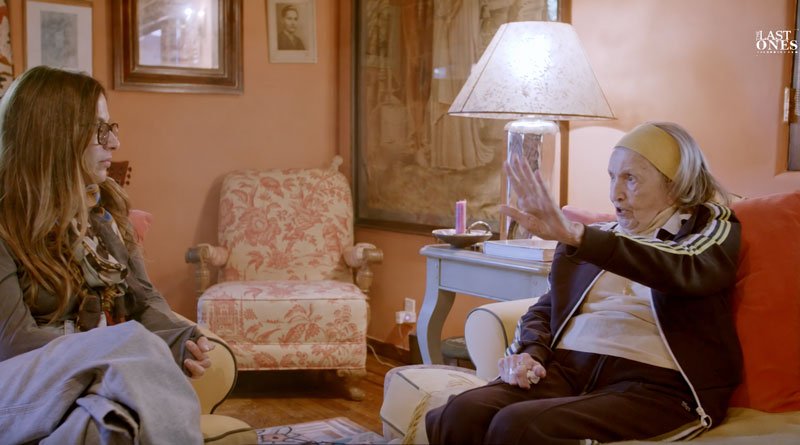
A Visit with Lucy
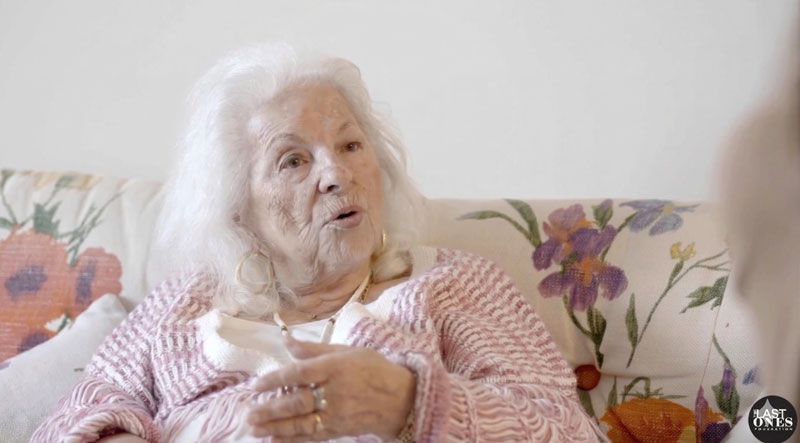
Leslie: Today I’m in Miami meeting Lucy, one of the eldest living Holocaust survivors. Lucy was born in 1921 in Berlin. She grew up with her brother [brother’s name unclear in captions], older by only one year in a Jewish home that was not very religious.
Leslie: Hi Lucy.
Lucy: Hi Leslie.
Leslie: How are you? Oh my god, you look so beautiful as always. And how old are you going to be?
Lucy: 104.
Leslie: 104 years old.
Lucy: 104.
Leslie: Wow.
Lucy: This was last year.
Leslie: You know what we say?
Speaker unconfirmed: Yeah. Yeah. I know. I know. I know.
Childhood Under Nazi Rule
Leslie: Lucy was just 12 years old when Hitler came into power. She remembers the very first anti-semitic measures.
Lucy: You had to put the Hitler greeting to raise your your hand.
Lucy: Yeah. So Jewish we could not do that. We were just standing still. So that became uncomfortable and also they started to have instead of like biology race and he called my brother to the podium. They would want to say what an Aryan person looks like, like maybe your nose and eyes and the difference from here to here or whatever, you know.
Leslie: Her classmates began to turn away from her.
Lucy: She went over to the other side of the street not to greet me because if she would have and somebody sees it and they could denounce her and then she would have maybe problems or her parents would have problems.
Leslie: Lucy remembers
Kristallnacht and Arrest
Leslie: Kristallnacht in 1938.
Lucy: During the night there was this pogrom and then later I saw it. They broke the show windows of stores and burnt synagogues and devastated. Later we had to wear the star to be marked.
Leslie: Lucy’s family managed to survive in Berlin until the day of their arrest in October 1941.
Lucy: Two Gestapo men came. You have a half hour time to pack what you can carry. My mother went to the kitchen to boil all the eggs that we still had. I put on a warm pants. I had a blouse and a sweater and a jacket and then the coat I put on over myself whatever I could fit.
Deportation to the Łódź Ghetto
Leslie: They were then deported to Poland to the Łódź ghetto.
Lucy: When we arrived on the 25th of October, my birthday was exactly 1 month later.
Leslie: Mhm.
Lucy: Where I turned 20. It was my saddest birthday.
Leslie: The family lived in unbearable conditions. 18 people crowded into a wooden barrack.
Lucy: Once a day, you had to go to the kitchen. You get your watery soup where you could see maybe a piece of carrot swimming in winter and we no heat and the water freezing in the pump. When you went to the bathroom, PP froze, right?
Illness and the Loss of Her Parents
Leslie: In March, a typhus epidemic spread by lice swept through the ghetto.
Lucy: My mother got sick, I got sick, other people got sick, and we were transported to the Jewish hospital. We got shaved off of our hair. They put my mother and myself into the same bathtub to get cleaned. I have never seen my mother bald. She had beautiful long hair. You have a very high fever. You’re more or less unconscious. You don’t eat. and she did not withstand the crisis. She passed away there.
Lucy: And about a few days later came a woman into my ward. She told me, “Your father is also now in the hospital.” And I walked to that room and I did not recognize him because he got so thin and also no hair and I was not used to that. But he recognized me and he had some food on his nightstand because he couldn’t eat like I knew I couldn’t eat. He gave it to me of course. So the next day when I wanted to visit him again, the place where his bed was was empty.
Forced Labor and Hunger
Leslie: After the epidemic, Lucy and her brother were forced to work for the SS. Lucy was assigned to agricultural labor.
Lucy: I had to go to do some planting and stuff and I ate the wheat like a cow.
Leslie: Mhm. And that was because you didn’t have food.
Lucy: Yeah. We did not have enough food and I ate and I planted and I put in pocket. I took home for my brother some of the wheat and I guess it helped me. I didn’t even know it. so healthy to eat it.
Arrival at Auschwitz
Leslie: In August 1944, they were deported in cattle cars to Auschwitz where they were met by kapos who stripped them of their belongings.
Lucy: The Jewish people that had those jobs they called kapos. They had to be tough and they said out out. So you had not even time to take your suitcase. They pushed you out. She had to line up in five. When we came in front of that famous Dr. Mengele the kapos they said to an young woman if she would carry her child she would say give this child to an old woman. They didn’t know why and the kid would cry and so they didn’t do it. Then they would go to the gas chamber.
Lucy: Gas chamber right away. So I lost sight of my brother. My brother was maybe weaker than I. Young man needs a little more food yet. They said if you cannot walk well there is a wagon or trucks whatever you can go on that. And I was always very sporty and gymnast and everything and I walk. And so I always thought he may have gone on such a wagon and did not survive.
Surviving the Camp
Leslie: Lucy was declared fit for work. One of the kapos recognized her and tried to protect her. So she took care
Lucy: of me and my hair was clean. So she did not shave it completely and then throw you some [term for clothes unclear in captions], you know, whatever it is. Size 10, size six, no, just whatever they grab.
Lucy: And the barrack that we were assigned to did not even have any more bunk beds. We were sleeping on the cement floor when we were led early in the morning 5:00 something to stand outside Appell where they counted you. So like a herd of animals had to walk and then one of those Nazi women would just like that. It hit me once, not particularly choosing anybody, just like when you heard the animals do this was okay.
Work in a Textile Factory and Liberation
Leslie: Lucy was then sent to a textile factory where she was treated slightly better.
Lucy: The director of this factory was a decent man. I told you I was lucky. If we wanted to, he gave us knitting needles and that yarn. I knitted myself a beautiful dress there. Something that my mother had a dress like that and I somehow made it like her dress was. In
Leslie: May 1945, the camp was liberated by the Russian army.
Lucy: The Nazi women got shaved there by the Russians. They treated them like we were treated. They shaved their hair. They raped them. They steal their watches and they mistreated them. and we protected the director as much as we could that they should send the good men.
A New Life and Lasting Scars
Leslie: Lucy would never learn how her brother died. She managed to immigrate to the United States in 1946 where she became a fashion designer. In 1948, she married Fred, a fellow Holocaust survivor. Lucy has carried the scars of what she endured for her entire life. She never had children.
Lucy: When I saw what
Lucy: happens to people and children and in Auschwitz in the barrack that I stayed was a pregnant woman and when she gave birth one night and screamed like hell and and the Nazi women took newspaper and wrapped that baby and and then we never saw the woman either. anymore and all of that. I I was afraid to have children.
A Message of Tolerance
Leslie: Do you think that the anti-semitism today looks like the anti-semitism that you saw growing up in Berlin?
Lucy: Some of them, I’m afraid. I I wonder if they learned from our books and our history. I am not sure. I am not sure.
Leslie: What do you want them to learn from your story?
Lucy: That they should be tolerant, that they should respect every human being.
Speaker unconfirmed: I think we need some sweets. I think we need some sweets.
Speaker unconfirmed: I’m going to cut it. Okay. [Question about the knife unclear in captions.] Perfect. Do you want me to cut it? Yummy. Yummy.
Leslie: We laughed, we cried, we did everything. I’m so glad we met, Lucy. I am
Lucy: glad for your visit and for you.
Leslie: Thank you, Lucy. Thank you.
Lucy: You’re very welcome.
Leslie: Thank you.