I Still Love People
An Interview with Marie
A Visit with Marie
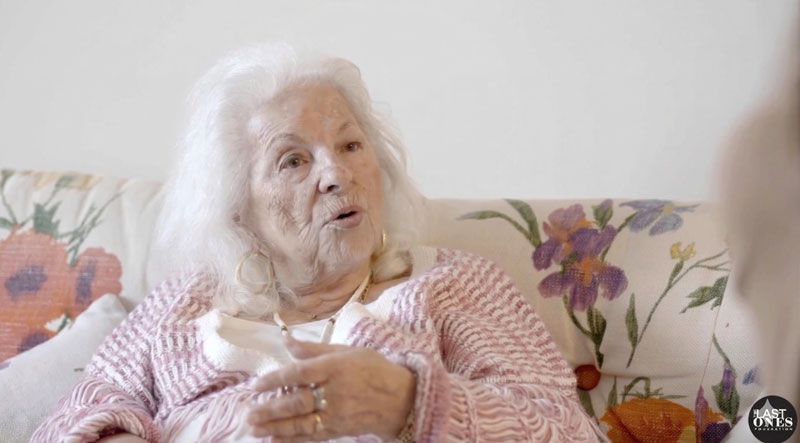
Leslie: Today I’m in Palm Beach where I’m meeting Marie. Marie was born in 1936 in Belgium, the youngest of three children. She grew up in a Jewish family originally from Russia and Poland.
Speaker unconfirmed: Hello. Hello. Hi. Hi. Hey, how are you? So nice to meet you. Yes, nice to meet you, Marie. Oh, thank you. Thank you.
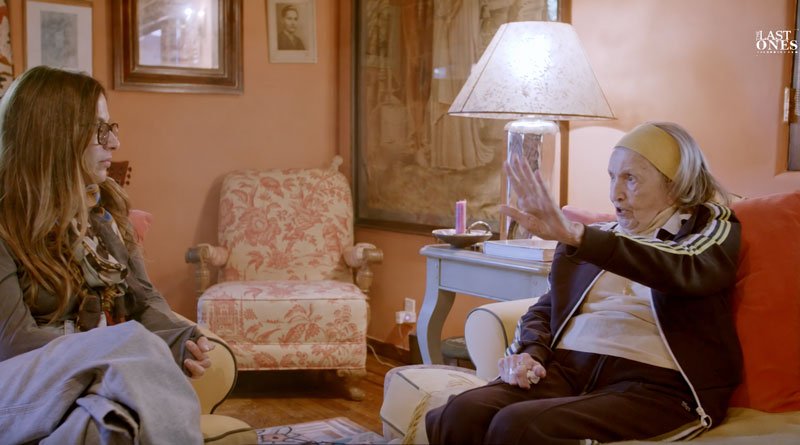
Leslie: She welcomes me into her home together with her adopted daughter, Sher.
Leslie: How are you?
Marie: I’m fine.
Leslie: You’re fine. I brought you a little something for you. It’s a [cake name unclear in captions].
Marie: Oh, thank you.
Leslie: Something a little sweet.
Memories of Her Grandmother
Leslie: It reminds her of the dishes from her childhood that her grandmother used to prepare.
Marie: I remember how she prepared chicken soup and gefilte fish the oldfashioned way. All along, you know, in the skin.
Leslie: That’s my passion. I love it. Did she put it in the in the in in the tub?
Speaker unconfirmed: In a tub. All along. Alive. I know. I remember. Alive.
Leslie: You speak Yiddish a little bit.
Marie: A little bit.
Speaker unconfirmed: It’s Yeah, that that I know. I know for my father. I remember. Wonderful. Wonderful. Thank you for the gift.
Separation and Arrest
Leslie: In Brussels, Marie spends the early years of her childhood in a warm and loving home. In 1939, her father obtains a visa for the United States and leaves with her brother David. Marie remains behind with her mother and her sister Irene, waiting for a visa so they can join their father. But nothing unfolds as expected. In 1940, they are arrested by the Nazis.
Marie: We were taken from Belgium and put on a train and the train took us to [camp name unclear in captions] to France. My sister and I were together, but my mother was separated from us and she became a cook for the Nazis.
Marie: [words unclear in captions] in the camp. We could still see my mother at a certain time when the guard wasn’t watching. She would pass us raw vegetables like rutaba and I still can’t say it in English.
Leslie: Me neither.
Marie: and and uh carrots.
Leslie: Mhm.
Marie: And raw potatoes. It really was not a healthy situation.
A Child’s Life in the Camp
Leslie: Do you remember what your days were like?
Marie: My days?
Leslie: Well, when you were in the…
Marie: I remember. Yeah. We we would we would pile up rocks. We would take a rock and make a pile and take another rock and add it to the pile and blah blah blah. You know,
Leslie: was your sister taking care of you? Were you taking care of each other? How was it like to be just the two of you together?
Marie: My sister was never my sister.
Leslie: What does that mean? She was more of a parent?
Marie: No. She’s never been there for me.
Leslie: Even in there. Even in the camp.
Marie: In the camp. Yeah. For one thing, I felt very alone. I didn’t have toys and I didn’t have someone I could turn to in a place that you don’t even know why you’re there.
Marie: It hurts. It hurts because you don’t even know who you are. How do you explain to someone I’m a human being? What’s happening? What am I doing here? Why am I here?
Rescue by the French Resistance
Leslie: After a year in prison, members of the French resistance managed to help the children escape during what is supposed to be a medical visit.
Leslie: So whether they were wearing Nazi uniforms or not to get away with something like that, that was like a big operation.
Marie: Yes. We
Marie: traveled at night. We couldn’t talk. Don’t talk. Don’t say a word. And then the Maquis would take us from one place and then another group of the underground would come and take to another place. I do remember one place
Marie: that we were left. It was a uh [place-name unclear in captions]. It was run by nuns. We prayed all the time. You prayed when you got up. You prayed when you washed. It was pray, pray, pray, pray.
Marie: It stayed with me. It’s still with me today because even though life was not easy and I had to work like everybody else, I wanted to become a nun. Actually, that’s the first time I believe that I felt some security there.
Leslie: Did you realize back then that you know they were Catholic and you were Jewish or there was no
Marie: I knew I was different.
Hiding in the Alps
Leslie: Marie and her sister are then hidden in a small village in the Alps.
Marie: The [word unclear in captions] came and they were searching for Jewish people. One of the sisters told us to go up cuz we were staying at the attic, Irene and I. So Irene had already gone and I went and hid under the bed.
Marie: In the meantime, I heard these footsteps going up and up and up, and I felt a hand on the door knob. And somebody must have called him because just before he opened the door knob, he went back downstairs.
Marie: Just before the war ended, they were collecting all the Jews they could. and murder them. My sister and I and I suppose my mother, we barely escaped that. The next step was going on the train and go to the death camps. We just barely barely made it out of that situation.
Reunion in America
Leslie: After the war, their father manages to trace them and brings his daughters to the United States. Their mother, who has met someone, decides to remain in Europe and rebuild her life there.
Leslie: Do you remember when you arrived in America? You were 10 years old. Was your dad there to welcome you when you arrived?
Marie: Oh, yes.
Leslie: Did you recognize him right away?
Marie: No. And not David either.
Leslie: Did he hug you? Like
Marie: I wouldn’t let anybody touch me.
Leslie: Why?
Marie: I didn’t want to be touched.
Leslie: Do you think this is something that you’re carrying from the camp?
Marie: I do, but it has never left me.
Antisemitism After the War
Leslie: Marie grows up in the Bronx, New York, but even there anti-semitism follows her.
Marie: They called me big nose and you know a lot of horrible names.
Marie: Go back where you come from, you know. And I was told America the beautiful and the streets are lined in gold. You know that kind of stuff. I didn’t expect that kind of uh greeting.
Helping Children Understand
Leslie: She later marries and has two children. For the past several years, Marie has been sharing her story with younger generations, determined to ensure that the history she lived through is never forgotten.
Marie: I want them to feel what I felt, what I went through as a child. That’s very important because if they don’t feel what I have gone through, they won’t understand the basis of what Holocaust survivor means and what they in turn have been able to have while so many of us did not.
Marie: I could cry for years and years for everything that’s happened to me. But I still love people.
A Farewell
Leslie: So next time I see you, you’ll be running.
Marie: Not running, but walking.
Leslie: All right. Can I hug you or cuz I I’m asking you before. I don’t want to impose it on you.
Marie: [Reply about hugging unclear in captions.] We hugged anyway before.
Leslie: Be well. Take good care of yourself. Keep going what you’re doing. like keep keep going to schools, keep teaching these these children. Thank you very
Speaker unconfirmed: much. Thank you. Thanks for everything. Bye, Maddie. Bye. Bye. Bye. Bye. Bye. I love you. Bye. Bye. Same guys.