A Journey to Safety, a Lifetime of Remembrance
An Interview with Miriam
A Visit with Miriam
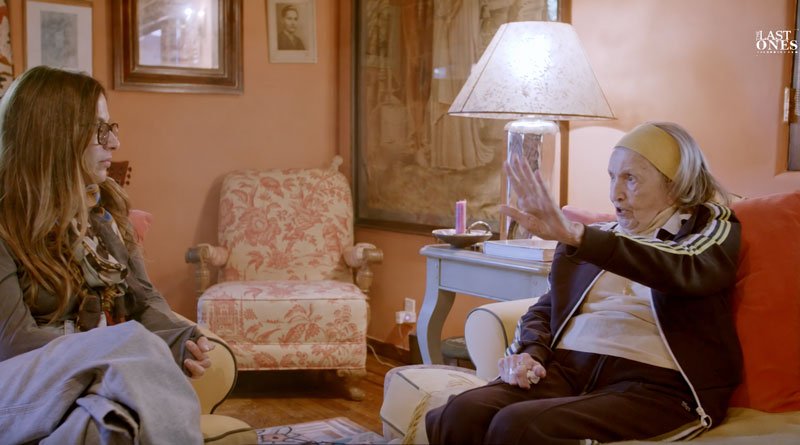
Leslie: Today I’m in Miami and I’m meeting with Miriam. She is essential here when it comes to the memory of the Holocaust.
Leslie: Hi, Miriam.
Miriam: Hi.
Speaker unconfirmed: I’m so happy to finally meet you. I’m so happy to meet you.
Leslie: Okay. Thank you for giving me even like a little bit of your time because I know how precious it is and I know how busy you are. Um I baked this little something for you yesterday. Oh,
Miriam: wonderful. Looks like a babka and I love babkas.
Leslie: Good. I’m so happy. The big knife. Okay, here we go.
Speaker unconfirmed: M. Don’t push yourself. Thank you. We needed that. Aaya. Aaya. Exactly. It’s good. It’s a babka. Babka. But Oh, I love it. With like vanilla.
Leslie: Miriam, is this you on the picture
Miriam: in Israel? 30 35 years ago.
A Life Dedicated to Holocaust Education
Leslie: Miriam is a child survivor and a Holocaust educator. She is the founding director of the Holocaust education program at the University of Miami and the education chairperson at the memorial in Miami Beach. She draws this strong commitment from her personal story.
Leslie: Can you show me the picture of you like that you that was taken when you were still in
Childhood in Košice
Miriam: right in front of a store near my house in Košice. So I was born in Košice Kassa [name to verify] as it’s known Czechoslovakia.
Miriam: We lived in a street in Košice which was a cul-de-sac and there were 10 or 11 other Klein family members that lived with us. There was grandma, grandpa, uncles, cousins. We all lived together.
Leslie: Was there a vibrant Jewish community there?
Miriam: Yes,
Leslie: Miriam, still known as [childhood name unclear in captions], is with her mother, who is carrying her younger brother in her arms in Košice, the city where she was born, which at the time had more than 12,000 Jews. Her grandfather is a rabbi and her father is about to become one. But everything changes in 1939 with the arrival of the Nazis.
Miriam: Suddenly it was a Shabbat evening
Her Father’s Arrest
Miriam: and there’s a banging on the door and these soldiers come in and grab my father and they take him away and my mother you know was screaming I could still [word unclear in captions] and my baby brother who was only 9 months old and I didn’t understand what was going on and then when he was gone and we came out I I was told that my dad was taken away because we’re Jewish. Jewish.
Leslie: Do you remember the fear that night?
Miriam: Well, sure. Yeah. The fear of what what just happened? Why was I shoved in a closet? Why was my dad taken? And and being explained that we were Jewish, which I didn’t understand what was wrong with being Jewish. I now realize in retrospect that that was probably my first experience with anti-semitism.
Leslie: Her father is then taken to a labor camp in Hungary. He manages to escape by making the guards believe he would give them money in exchange for his freedom.
Preparing to Flee
Miriam: Well, the next thing I remember was my dad rushed in the door. He he looked gaunt, disheveled, and I heard him say to my mother that he escaped and that we had to leave immediately. So my mother said, “What are you crazy?” She had a twin sister. So here’s a picture of the twin and her husband.
Leslie: Wow.
Miriam: She was not going to leave her twin sister. She was not going to leave everything she knew to go where. And what my mom didn’t realize and didn’t know is that my dad had been very quietly preparing to leave
Miriam: to he knew from the moment that Hitler became chancellor that there was going to be trouble. So my dad had begun to uh the process of paperwork to for visas to get out and the word was that HIAS in New York was sending ships to Lisbon, Portugal. So that’s where we were headed. and my aunt in Chicago had already bought tickets for us for a ship called the Niassa [ship name to verify] which was due to leave April of 1941 to bring us. So it was now
Miriam: December, which meant that we had to get from Slovakia to Lisbon
Leslie: all the way to Lisbon
Miriam: by April to catch the Niassa [ship name to verify]. And that began our journey.
A Journey Across Europe
Miriam: And my first memory is uh running, running, running, always rushing to catch a train, get off a train, get on a train, get off a train. And at one point in at night, my father got on one train and my mother and I, the baby [name unclear in captions] got on another train. So she lost him. So one of my earliest memories is her screaming, “Maurice, Maurice, where are you? Where are you?” And me being very frightened, thus my dad again.
Miriam: So we found him. What happened was when we got to Spain, which was in um early February, Nazi had not occupied Spain, but they were empathetic to the Nazis. And the border guards were very anti-Semitic. They hated Jews. They put us into a hotel in [town name unclear in captions], Spain, and um let us just sit there to figure out what we should do.
Miriam: My father was a very friendly man. He made friends with a non Nazi German Christian tourist who felt very sorry for this little family of four. And um he said maybe I can help you.
Finding a Way to Lisbon
Leslie: The German helps them write a letter explaining that they have a visa and money and that the family simply wants to go to Lisbon to take the boat to the US. And the letter worked because we got
Miriam: into Lisbon. Well, when we got to Lisbon, which was late February, we still had a couple months to make it to the ship. However, the American visa had run out. So now what did the Lisbon people do with the 123,000 Jews that went through Lisbon between 1940 and 42? They took the Jews in and they allowed them to stay in uh the Jewish community until people could get their papers because they were not Nazi sympathizers.
Waiting for a Visa
Leslie: The parents struggle to obtain a new visa, but don’t get it in time, and the family misses their boat. Like many Jews, the family waits in Lisbon, but faced with German pressure, the Portuguese authorities only give them a temporary authorization to stay in the territory.
Miriam: My mom said she was so distraught at that point that she seriously was going to leave me there with my brother to be taken care of if they had to go back. And that causes deep emotion.
Miriam: Well, you you you can the thought that that I would have been raised by somebody else beside because I love my mother and father very much uh has always brought up deep emotions.
Leslie: It’s a hard decision, but she was going to do it.
A Ship to America
Miriam: Well, as it turned out, uh a ship came on May 15th called the [ship name unclear in captions: “Seuda de Seilla”]. Mhm. And uh it was our ship. It was our turn. And then it sailed on into New York.
Leslie: The Klein family obtains American citizenship and from there a new life begins for them. Despite the pleadings, Lily, her mother’s twin sister, and her two daughters refused to flee and follow Miriam’s family.
Remembering Those Who Stayed Behind
Miriam: The pessimists left and the optimists stayed and the optimists were murdered. Lily was an optimistic. She was optimistic that she would stay and everything would be all right. Yeah,
Leslie: she stayed.
Miriam: She stayed and we never saw her again. We think she died in Auschwitz cuz all the Hungarian Jews were taken in 1944. So I spent all my adult life growing up hearing my mother screaming in the night for her sister Lily. She was her twin.
Miriam: Another facet of the story is that my grandparents were found and so he found an attic to hide in. And when the last transport that had Elie Wiesel on it came through Košice in late 1944, it picked up all 15,000 Jews of Košice, took them to Auschwitz and murdered all of them immediately because it was getting to be near the end of the war. But the
Miriam: Klein family was hiding in the attic. So they came down when they thought it was safe and they then went and hid in the woods and lived in the woods until the war was over. And that’s how they survived. And so when my father found them um he brought them to America and that’s when I went to see them arrive in America.
A Family’s New Life and a Tribute to the Lost
Leslie: After a long journey through history and time, little [childhood name unclear in captions] became the famous Dr. Miriam Klein [surname unclear in captions]. Her little brother [brother’s name unclear in captions] became a federal judge in South Florida. Her father, a chief rabbi in Miami. Her mother had a third child, Hank, who became a prominent businessman. But no one has forgotten those who have perished.
Miriam: This is the twins.
Leslie: Can you make the difference? Which one is your mom? No,
Miriam: no, I don’t know.
Leslie: So, you have here all the pictures of your loved ones who are not here. And you have the candles. Do you like the candles?
Miriam: The reason I keep those candles there is I have Rosh Hashanah dinner here every year.
Leslie: Mhm.
Miriam: And I make everybody that’s here my [Yiddish term unclear in captions] to all kinds of people. Everybody has to light a candle. So, I leave it there. It’s sort of my little tribute to the family.
Leslie: Thank you very much.
Miriam: It was my pleasure to you, beautiful young lady.
Leslie: Thank you.
Miriam: Thank you, cameraman. Be well and stay safe and keep up with the good work that you’re doing. Okay? Keep in touch.
Leslie: Thank you.
Miriam: Don’t, as my father used to say, don’t be a stranger.
Leslie: I won’t. I won’t. Bye, Miriam. Bye.
Speaker unconfirmed: Thank you so much. Byebye. Bye. Okay.